



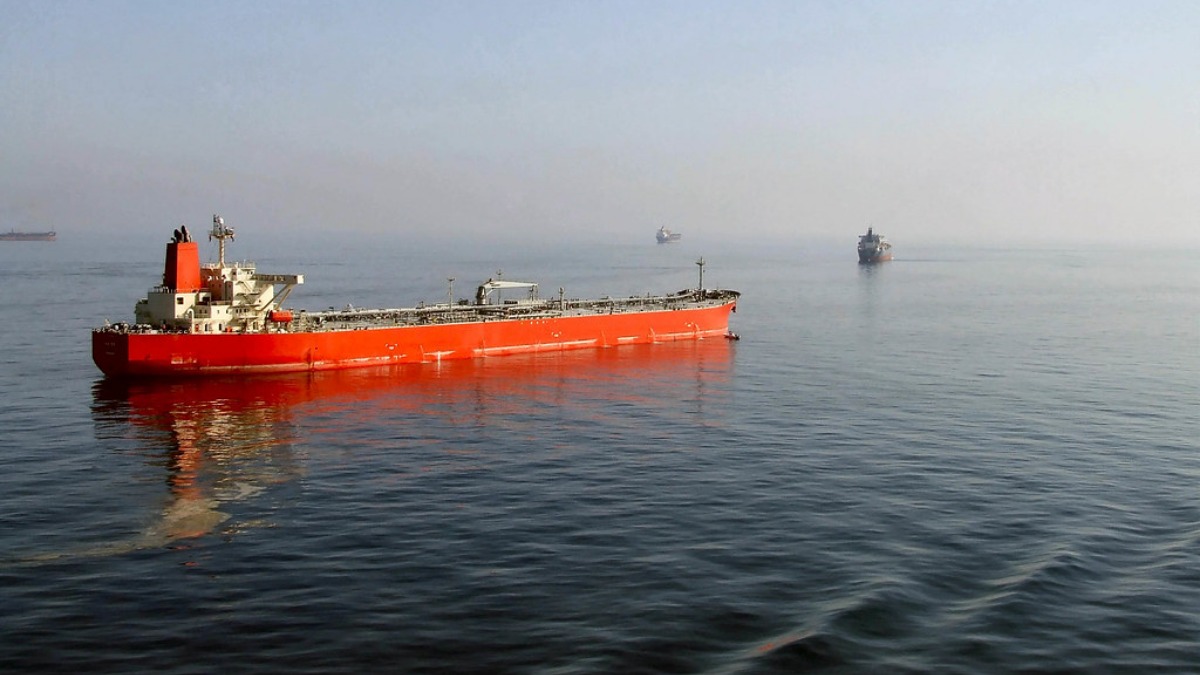

China has been one of the loudest voices against the United States naval blockade of the Strait of Hormuz. But within hours of Beijing issuing that criticism, a Chinese-owned tanker that was already under American sanctions passed through the waterway anyway, raising questions about just how seriously China’s words are being taken, or how much control Beijing has over these ships. The blockade went into effect at 10:00 AM ET on Monday, April 13.
It came after weekend peace talks in Islamabad between the US and Iran collapsed without a deal after 21 hours of negotiations. President Trump responded quickly, announcing that the US Navy would block all ships entering or leaving Iranian ports and coastal areas, including those on the Arabian Gulf and the Gulf of Oman. CENTCOM later clarified that ships going to and from non-Iranian ports would not be stopped.
According to Forbes, at the Chinese Foreign Ministry’s daily press briefing, spokesperson Guo Jiakun called the American blockade a “dangerous and irresponsible act” that would raise tensions further and weaken what he described as an “already fragile ceasefire.” The day before, Beijing’s response had been milder, simply calling for “restraint” from all sides.
Beijing is talking tough but its ships are still moving
But even as China’s tone hardened, ship tracking data told a different story on the water. The tanker Rich Starry, owned by Shanghai Xuanrun Shipping Co, passed through the strait carrying around 250,000 barrels of methanol. Both the ship and its parent company had been sanctioned by the US in 2023 for helping Iran get around oil export sanctions. A second sanctioned vessel, the Elpis, had already crossed on Monday, the day the blockade began.
China is in a complicated spot here. It imports more oil than any other country in the world, and a large share of that comes through the Strait of Hormuz. Before the war began on February 28, roughly a fifth of the world’s oil and gas passed through the strait daily.
China also buys about 95% of all the crude oil Iran exports, much of it through a network of sanctioned tankers. So the blockade hits China directly, both as a buyer of Iranian oil and as a country dependent on Gulf energy routes.
President Xi Jinping also weighed in during a meeting with Spanish Prime Minister Pedro Sanchez. He said the “international order is crumbling into disarray,” without naming the United States directly. In a separate meeting with Abu Dhabi Crown Prince Sheikh Khaled bin Mohammed, Xi said China would “continue to play a constructive role” in the Middle East and added that the world must not be allowed to go back to “the law of the jungle.”
China also denied reports that it was preparing to send new air defense systems to Iran, with spokesperson Guo calling those claims “completely fabricated.” Trump had warned on Sunday that he would hit Chinese goods with a 50% tariff if Beijing provided military help to Tehran. Brent crude oil prices rose 7% to around $102 per barrel on Monday, compared to roughly $70 before the war started.Adding to the concern, Iran had previously laid mines in the strait and later lost track of where they were placed, leaving hundreds of loaded tankers unable to move safely.
With nearly 800 ships reported to be stuck in the Gulf region, and global food and energy supply chains under serious stress, the pressure is mounting on all sides to find a way out, reports BBC. For now, the words from Beijing and the movements of its ships are pointing in very different directions.





Published: Apr 14, 2026 01:45 pm