



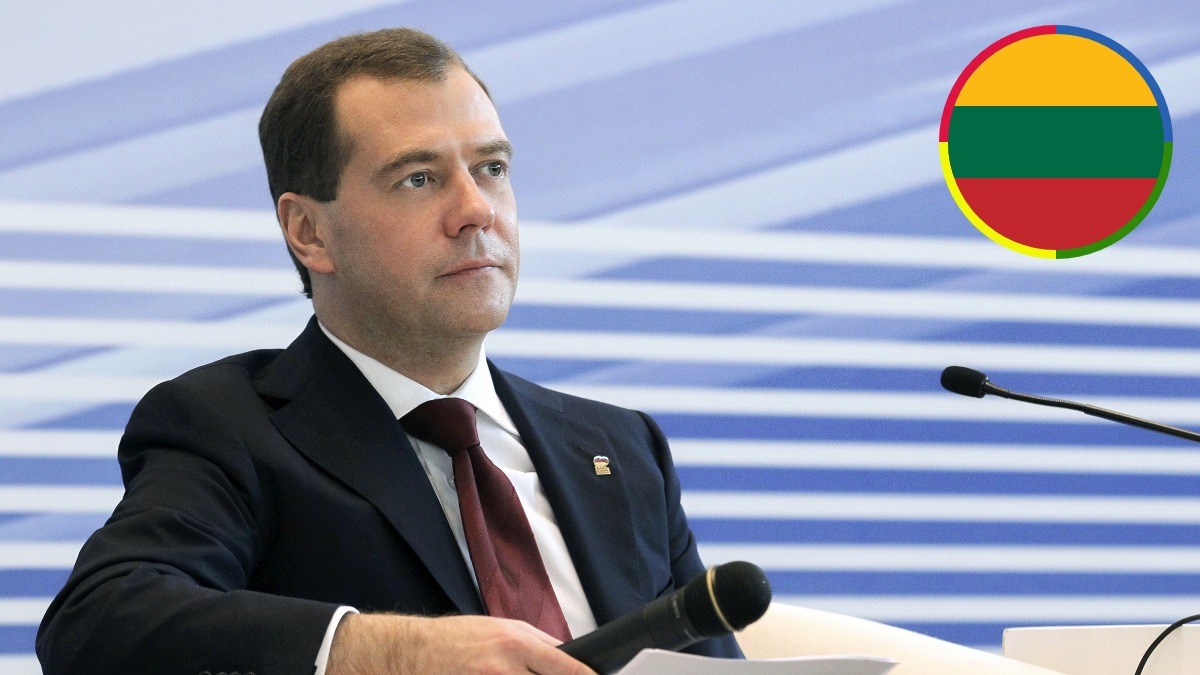

The Baltic region has taken a tense turn after Dmitry Medvedev, the deputy chairman of Russia’s Security Council, issued an unusually aggressive warning about Lithuania. Medvedev stated Lithuania could “disappear from the world map” if it allowed nuclear weapons on its soil, according to Ukrainska Pravda. He claimed NATO members would decline to defend Lithuania if a conflict broke out, fearing a wider catastrophe.
It’s crucial to look at what’s actually happening on the ground, as Lithuania has not announced that American nuclear bombs are moving in. The debate centers on Article 137 of its Constitution, which dates to the early post-Soviet era and bans foreign military bases and weapons of mass destruction on Lithuanian territory.
Many Lithuanian politicians argue this clause is outdated and hampers the country’s ability to participate fully in NATO’s collective security framework. On July 7, parliament took a preliminary step toward removing the restriction, with 89 lawmakers voting in favor. The Seimas Legal Affairs Committee later endorsed the change on September 9 by a vote of 7 to 2.
Lithuania is a long way from actually hosting any weapons
This is far from a done deal. To amend the Constitution, at least 94 of the 141 members of parliament must approve the change twice, with a mandatory three-month waiting period between votes. Lithuania is merely creating the legal flexibility to participate in NATO nuclear deterrence, not signaling an immediate policy change.
Lithuanian officials have been clear about their intentions, as Parliament Speaker Juozas Olekas and Defense Minister Robertas Kaunas have both said the restriction is a relic of a different time. They aren’t pushing for permanent peacetime deployments, but want to remove a legal barrier that could prove problematic during a crisis.
Medvedev’s response, however, seeks to weaponize this debate through fear. His logic relies on nuclear coercion, suggesting Russia could target a smaller state while counting on the rest of NATO to abandon it. This directly challenges Article 5, the core of the NATO treaty, which dictates that an attack on one is an attack on all.
While Medvedev claims other nations would shy away from a fight, NATO leaders reaffirmed the “ironclad” nature of Article 5 at their July 2026 Ankara summit. NATO also has thousands of troops stationed in Lithuania, including a German armored brigade permanently based in the country, and any serious Russian aggression would almost certainly trigger the very conflict Medvedev suggests would be avoided.
The region is already highly volatile, with an Italian NATO fighter recently shooting down a drone that crossed into Lithuanian airspace from Belarus. Concerns about Moscow testing the alliance have been building for some time, with an unannounced trip to Russia by CIA Director John Ratcliffe recently fueling speculation about NATO’s resolve, although Trump dismissed the visit as “semi-routine.”
Medvedev has a long history of making extreme threats. As a former president and senior Kremlin figure, his words carry weight, but they often serve as a tool for intimidation, allowing Moscow to project strength without committing to a formal policy shift.
This situation highlights the ongoing security dilemma between NATO and Russia, and the threshold for a miscalculation will only grow more dangerous as Lithuania’s constitutional process moves toward its next vote.









Published: Sep 15, 2026 02:45 pm