



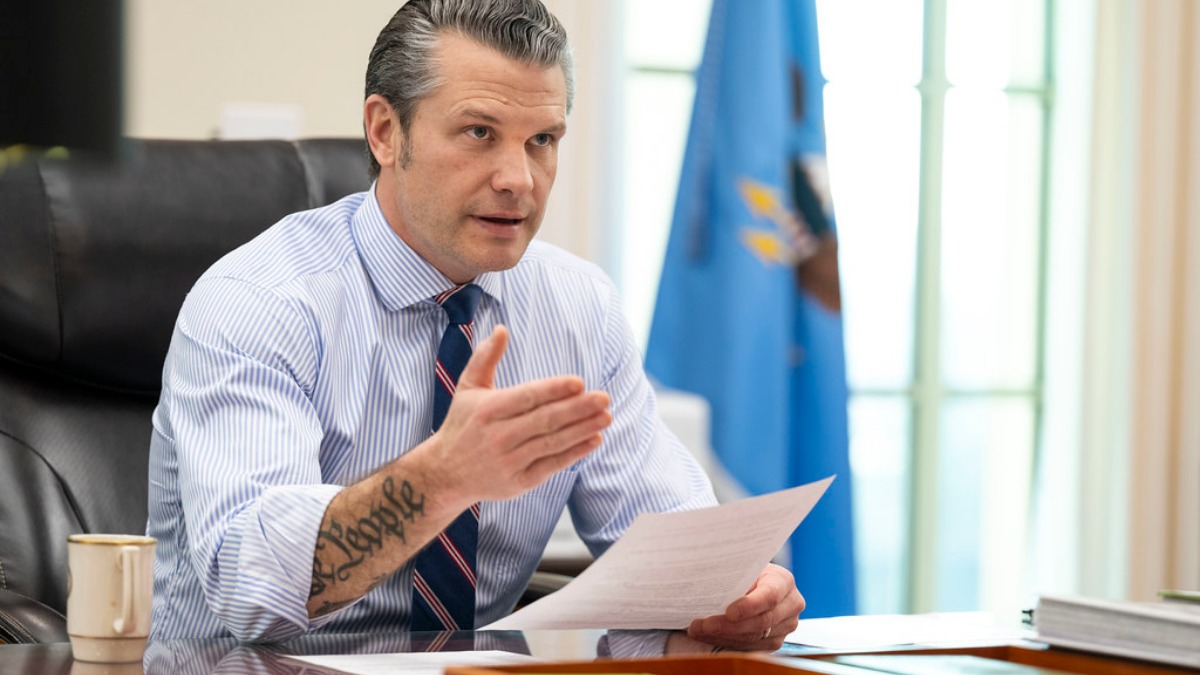

The Defense Department has officially barred reporters from entering its press office, marking a significant change in how the military talks to the public. The move is part of a wider effort by Defense Secretary Pete Hegseth, described by The Washington Post as a step that has “sharply curtailed access for the media.” It signals a sharper break from the way reporters and officials used to interact inside the building.
Reporters who used to walk into the press office to meet with public affairs officials have found the space closed to them in recent weeks. The office once worked as an open area where reporters could visit desks without needing an escort, making it easier to track down officials and ask questions in person.
It also served as a shared meeting space where press secretaries and other officials often held off-camera gaggles to answer questions, with reporters gathered on couches in the room. These informal sessions gave the press regular, direct contact with the people speaking for the department.
The closure follows a series of access restrictions at the Pentagon
The current administration has chosen a different approach. Neither Hegseth nor his staff have kept up the open, informal contact with the press. This latest step adds to a series of restrictive measures put in place since the start of the second Trump administration. The department has drawn attention before for other decisions, including an event invitation that drew criticism over its wording to junior troops.
Earlier, the Pentagon removed several mainstream outlets from their long-standing workspaces inside the building, giving those areas to right-leaning outlets like Breitbart. Pentagon press secretary Joel Valdez said the decision to limit entry to the press office was needed because the department has moved its speechwriters into that location.
Valdez noted that these speechwriters “routinely handle classified material.” He added, “As a result, journalists will no longer be permitted to enter the office space,” while saying that “Access to the office of the Assistant to the Secretary of War for Public Affairs and to the Press Secretary remains available by appointment only.”
Reports indicate the office is being fitted with the Secret Internet Protocol Router Network, known as SIPRNet. This lets staff use the tool right in the space instead of moving to a separate secured room. The change makes it harder for reporters who cover the beat to gather information, since they often rely on quick, face-to-face contact. The department has also faced a dispute over a military agreement involving the use of certain technology.
This is not the first time the department has tried to limit reporting inside its walls. Last year, officials asked reporters to sign a pledge that barred them from soliciting tips, photographing, or even sketching what they saw inside the building. Many outlets strongly objected to that request. The tension over transparency reached a legal point in late 2025, when The New York Times filed a lawsuit against the Defense Department over its general crackdown on press access. That legal challenge is still ongoing.









Published: Jun 2, 2026 03:45 pm