



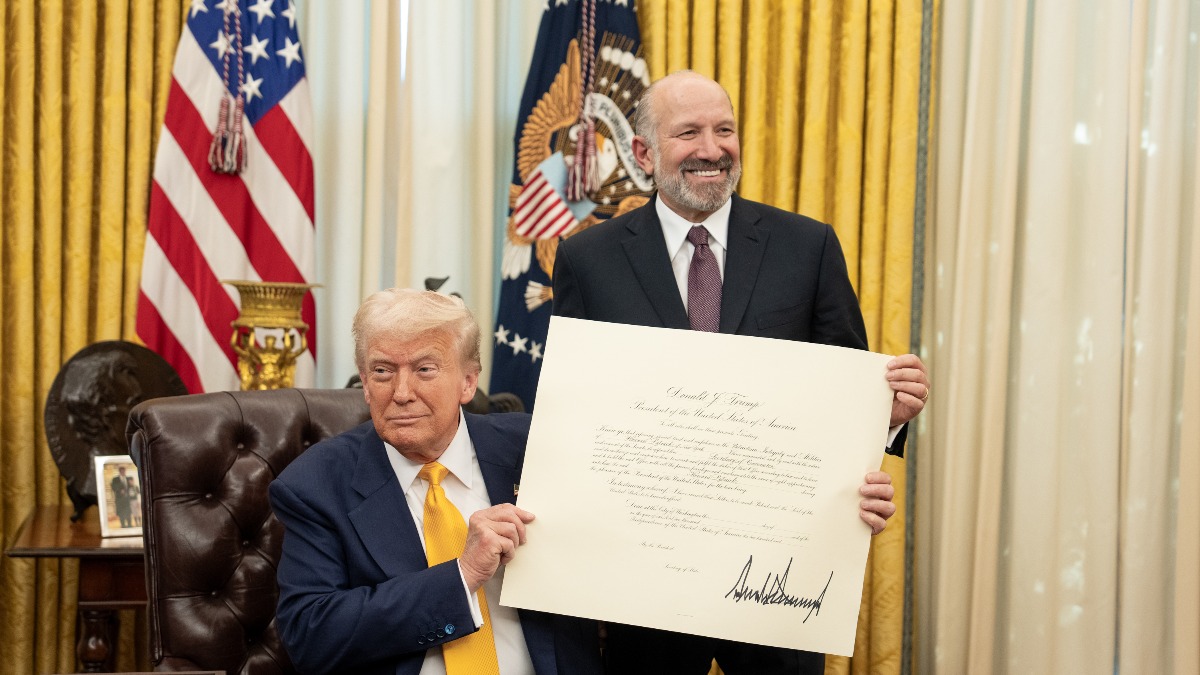

The Trump administration has finalized a major mining deal in Kazakhstan, gaining access to one of the world’s largest untapped tungsten reserves. President Trump personally worked out the agreement during a phone call with the Kazakh president last September. According to The New York Times, the deal is meant to supply the U.S. with metals needed for fighter jets, missile warheads, and computer chips.
While the administration treats the project as a priority, it has also drawn attention to a growing pattern of financial ties. Those ties connect the families of the president and Commerce Secretary Howard Lutnick to the companies that are receiving federal support.
The administration has offered preliminary applications for up to $1.6 billion in federal financing for Kaz Resources, the company leading the project. Records show the Trump and Lutnick families have financial connections to at least 14 companies now working with the federal government on critical mining deals.
The Kazakhstan deal links the two families to billions in federal money
These 14 companies are either receiving federal help or have pending permit applications before the Commerce Department, which Mr. Lutnick oversees. The total amount of taxpayer-backed support either provided or under consideration for these firms is more than $8.9 billion. Questions about how federal money is tracked have come up before, including reports that pledged Gaza reconstruction funds went unreceived.
The Kazakhstan deal involves complex corporate moves that link the president’s sons, Donald Trump Jr. and Eric Trump, to the venture. Within weeks of the early negotiations at the St. Regis Hotel in New York, a firm called Dominari Securities joined other partners to take a 20 percent stake in a corporate entity tied to the Kazakhstan project. Dominari is based at Trump Tower and is partly owned by the president’s sons.
At the same time, Cantor Fitzgerald, an investment firm overseen by Mr. Lutnick’s sons, Brandon and Kyle Lutnick, helped raise $210 million for a company involved in the deal. These kinds of fund-raising rounds usually earn the firm millions in fees.
The involvement of the Trump sons was not made public when the deal was signed on November 6. While the project aims to break ground in rural Kazakhstan, the corporate structure lets investors profit through a process known as a reverse merger, which is meant to take the mining operation public on the Nasdaq exchange. This allows early investors to potentially profit from stock price increases driven by federal backing.
The administration says its focus is strictly on national security and bringing critical supply chains back home. These metals also tie into broader foreign policy debates, including how U.S. and Israeli interests diverge on Iran. Kush Desai, a White House spokesman, stated that the only special interest guiding the administration is the best interest of the American people.
The Commerce Department noted that Mr. Lutnick sold his ownership stake in Cantor Fitzgerald and denied any contact between the department and the firm about the mining industry. A spokesman for Cantor Fitzgerald added that the company’s executives were not involved in discussions about government funding on behalf of their clients.
Despite these assurances, the overlap has drawn criticism. Representative Maxine Dexter of Oregon has called for oversight to make sure taxpayer dollars are used for the public interest rather than for the benefit of family members or those closely tied to the administration. Within the administration, some officials have privately expressed disappointment about these financial entanglements.
For now, the project remains in the feasibility stage. While the U.S. government has said it intends to provide up to $1.6 billion in financing, those funds are subject to further approvals. Pini Althaus, the executive chairman of Kaz Resources, said he is focused on moving toward production by 2030. He acknowledged that the optics of the situation might concern some people, but he insisted the project is a vital step in securing mineral independence for the United States.








Published: Jun 29, 2026 07:30 am