



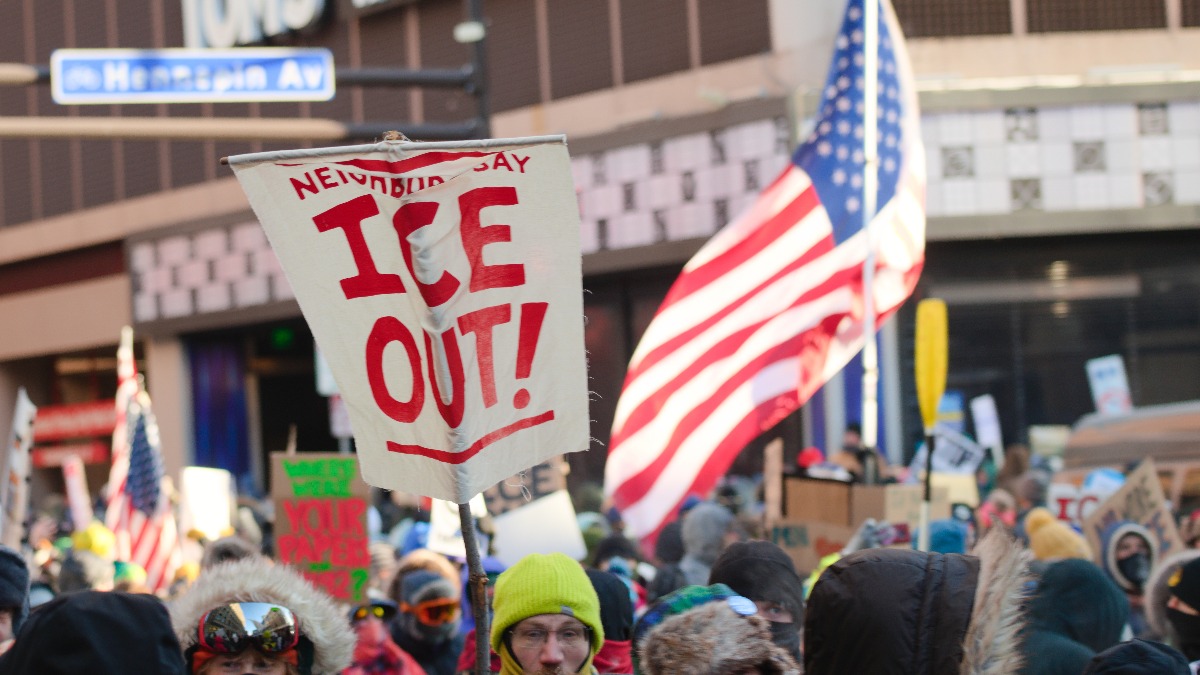

The White House has removed the audio from a TikTok video following a public confrontation with Ariana Grande, who called out the administration for using her 2024 song “Bye” in a post featuring immigration enforcement footage. As reported by The Tab, the video was uploaded on Monday and featured a montage of agents placing individuals in handcuffs at the border. The official White House account leaned into the track choice in the comments, writing, “Bye-bye… President Trump has delivered the most secure border in history.”
Grande left a pointed comment on the post, stating, “Please do not use my music in relation to this barbaric, inhumane, heinous nonsense.” She then screenshotted her own comment and posted it multiple times in the reply section to ensure the account could not ignore her message.
Her efforts paid off. The White House stripped the audio from the video and deleted her comments, prompting users to note, “They deleted her comment but she deleted the whole song lmao.”
The White House has a pattern of using artists’ music without permission
White House spokesperson Abigail Jackson told Rolling Stone in response: “We’ll say this one last time. What’s actually barbaric, inhumane, and heinous are the criminal illegal aliens who have injured and murdered innocent American citizens.” The phrasing appeared to reference the title of Grande’s 2014 track “One Last Time.”
Grande is not the only artist to have pushed back. When Sabrina Carpenter’s song “Juno” appeared in a video depicting ICE arrests in 2025, she called the move “evil and disgusting” and told the administration, “Do not ever involve me or my music to benefit your inhumane agenda.” Jackson responded on behalf of the White House in that instance as well, and the video was subsequently deleted. The administration has also faced friction with artists it has tried to book for events, amid ongoing disputes over rally performers pulled from its Freedom 250 lineup.
The legal reality for artists in these situations is often limited. Because of how music licenses are structured on social media platforms, artists frequently have little leverage to force content removal. Platforms typically pay blanket licensing fees to music rights organizations, which grants government accounts access to large song libraries regardless of whether the artist supports the content.
Other artists have faced the same issue with varying results. When the White House used Kesha’s “Blow” in a 2026 video showing a fighter jet firing a missile, she labeled the post “disgusting and inhumane” and told the administration to “stop using my music, perverts.”
White House Communications Director Steven Cheung argued the pushback only drove more views, and the video remained live. When Radiohead demanded removal of their song “Let Down” from an ICE video, the band ended their statement with a blunt “Also, go fck yourselves,” and the Department of Homeland Security did not confirm whether the video would be removed.
Outcomes have varied depending on how artists chose to respond, amid separate legislative battles over the administration’s broader agenda. Olivia Rodrigo’s “All-American Bitch” was used in a 2025 ICE video; after she criticized the use of her music to promote “racist, hateful propaganda,” the audio was stripped and replaced with an error message, though the video itself stayed up. Beyonce’s team saw a faster resolution in 2024 when a cease and desist letter over the use of “Freedom” led to the track being removed almost immediately.
The Isaac Hayes estate pursued legal action after “Hold On, I’m Coming” was used repeatedly at political events. In September 2024, a court issued a preliminary injunction barring further use of the song, and in February 2026, the estate announced a financial settlement.



Published: Jun 12, 2026 10:00 am