



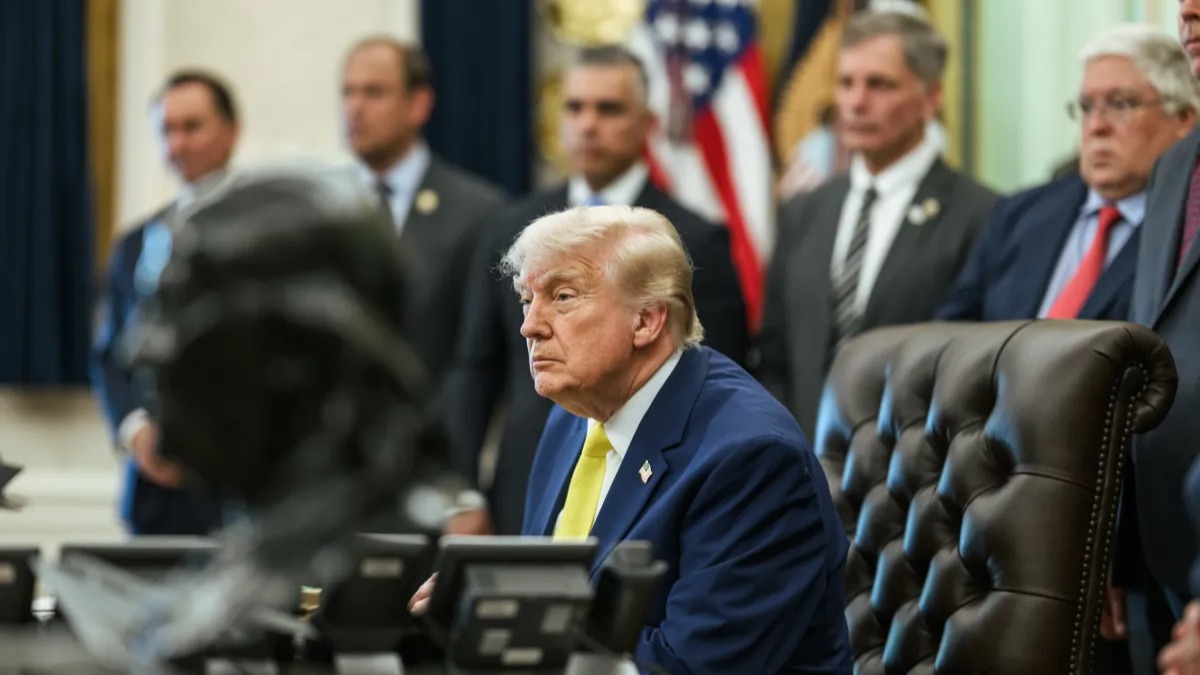

The Manhattan District Attorney’s office is now formally urging an intermediate appellate court in New York to reject President Donald Trump’s ongoing efforts to overturn his 2024 criminal hush money conviction, ABC News reported. This legal battle keeps the spotlight on a case that already made history, as Trump became the first American president to be convicted of a crime and then take office as a felon.
A jury in Manhattan previously convicted Trump of 34 counts of falsifying business records. Manhattan prosecutors argued that he engaged in a “scheme” to boost his chances during the 2016 presidential election by making hush money payments to adult film actress Stormy Daniels. The state alleged that he then falsified New York business records to cover up that conduct.
Trump is basing his current challenge on the Supreme Court’s 2024 presidential immunity decision. He argues that this ruling, which provides sweeping protection for official acts, should have rendered some of the evidence and testimony used by the prosecution off-limits during his trial.
The prosecutors are confident that their case remains strong despite these legal maneuvers
In their new filing to the Appellate Division’s First Department, prosecutors made it clear they believe there is nothing official about paying off an adult film star to suppress information about a long-denied affair. The district attorney’s office stated, “The criminal charges here arose from defendant’s unofficial, nonpresidential conduct — as multiple courts have already found, and defendant now concedes. Defendant complains that the immunity doctrine was violated because the People introduced evidence of official acts during the trial, but he is wrong.”
The prosecutors argued that “a mountain of evidence unaffected by any claim of official presidential immunity overwhelmingly established defendant’s guilt.” They are essentially telling the appellate court that the immunity argument simply doesn’t apply to the specific facts of this case.
Beyond the immunity issue, the district attorney’s office also addressed Trump’s claims that Justice Juan Merchan should have recused himself from the trial. Trump pointed to $35 in political donations that the judge made to organizations affiliated with the Democratic Party as a reason for bias.
Prosecutors dismissed this entirely in their filing. They wrote, “[T]here was no basis for the trial judge to recuse himself due to his years-old and de minimis ($35 in aggregate) contributions to candidates and organizations affiliated with the Democratic Party. The Advisory Committee on Judicial Ethics has already found that recusal was not required, and basic principles of judicial ethics support this conclusion.”
It is worth remembering that while the conviction carried the possibility of prison time, the sentencing phase played out in a unique way. Justice Merchan sentenced Trump to an unconditional discharge. He specifically noted the extraordinary circumstances involved in handing down a sentence to someone who was the president-elect at the time.
This latest filing ensures that the legal arguments surrounding the conviction will continue to play out in the appellate system.




Published: Jul 30, 2026 03:45 pm