



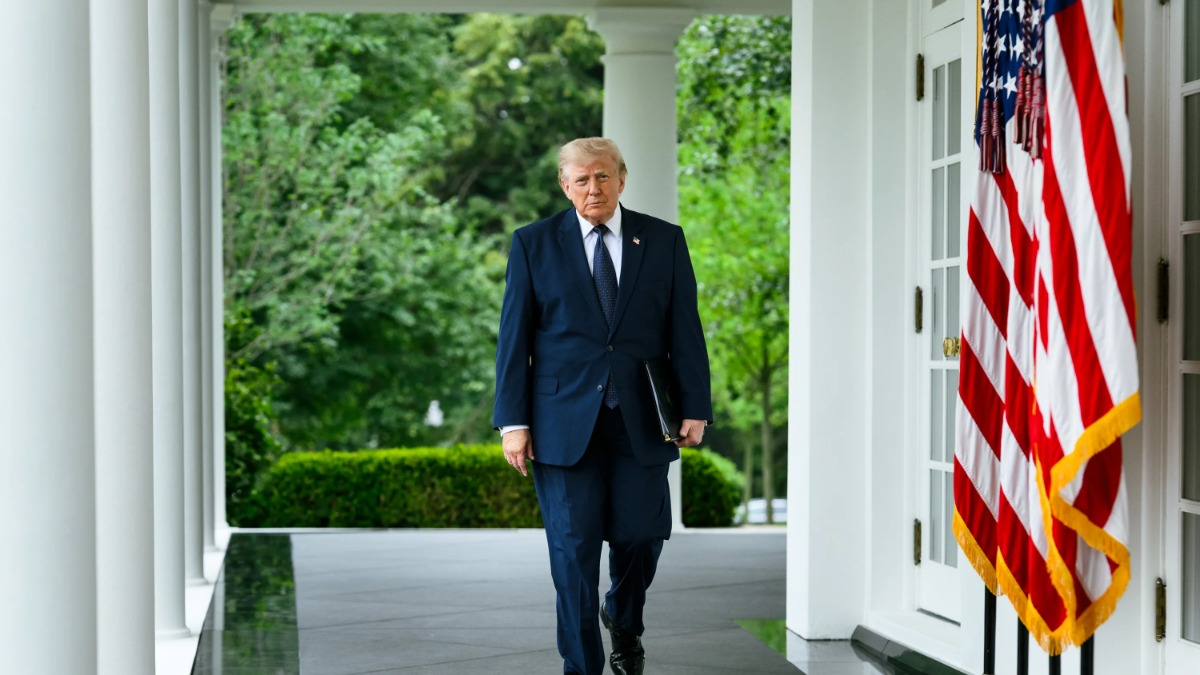

President Trump confirmed on Tuesday that he is currently not looking to move forward with negotiations involving the Iranian government. During an interview with Trey Yingst, the president expressed his frustration with the current state of affairs, specifically identifying the newest Iranian delegation as the primary obstacle preventing a deal, The Hill reported.
The situation has become increasingly complex following a series of incidents in the Strait of Hormuz. The United States has accused the Iranian government of violating a memorandum of understanding by attacking commercial vessels and disrupting their ability to transit the waterway safely. When asked by Yingst if the United States might be dealing with the wrong representatives, President Trump stated, “Well, now, I don’t want to negotiate now. I said, ‘Let’s not negotiate.’ Three days ago, we had a deal.”
Despite the president’s assertion that he is not seeking negotiations at this moment, it is clear that discussions between the two nations are still happening behind the scenes. President Trump noted that his representatives had been in contact with Iranian officials as recently as an hour before the interview took place.
This development comes at a time of heightened military activity
While the president opted not to provide specific details regarding the content of those ongoing conversations, he did suggest that the Iranian leadership is under significant pressure to secure an agreement. According to the president, the Iranians are eager to finalize a deal, yet he remains skeptical of their long-term intentions. He noted, “They want to make a deal, but every time they make a deal, they break it. They don’t want to die. People don’t want to die.”
The current tension stands in stark contrast to the optimism surrounding the 14-point memorandum of understanding that was signed by President Trump and the Iranian president on June 17. That agreement was designed to pause the fighting and provide a window of opportunity for both nations to work toward a comprehensive solution to the conflict. However, the memorandum has deteriorated significantly over the last several weeks.
The escalation reached a new point on Tuesday afternoon when the United States chose to reimpose a naval blockade on the strait. This was followed by military strikes on Iranian sites on Wednesday morning, marking the fifth attack in as many days. When asked about the duration of these military operations, the president was firm, telling Yingst, “They’ll continue until I say, ‘it’s enough.’”
The breakdown of the agreement follows a series of aggressive actions reported earlier in the week. On Friday, President Trump characterized an attack on commercial ships in the Strait of Hormuz as a “foolish violation” of the ceasefire.
Reports indicate that the United States military successfully shot down three out of four one-way attack drones launched by the Islamic Republic, though one drone managed to strike the upper deck of a cargo-carrying ship. This aligns with reports from the British military on Thursday, which noted that a vessel was struck by a projectile off the coast of Oman. These incidents occurred after several tankers had utilized a route that was supported by the United Nations.
The Iranian perspective on the safety of the waterway remains a major point of contention. Iranian Deputy Foreign Minister Kazem Gharibabadi issued a statement on Friday via X, asserting that Iran maintains control over the strait. He argued that safety cannot be guaranteed for vessels that choose to transit the waterway without consulting Tehran.
He stated, “Safe passage through the Strait of Hormuz, with ambiguous arrangements, parallel routes, or decision-making outside of Iran’s considerations as the coastal state, cannot be guaranteed.” He further emphasized that any credible framework must be based on coordination with Iran and the provisions of paragraph five of the Islamabad Memorandum of Understanding. He warned that otherwise, the outcome would be the suspension of the designated parallel route.
The fifth paragraph of the memorandum specifically stated that Iran would use its “best efforts” to ensure the safe passage of commercial vessels without charge for a period of 60 days. While a senior administration official had previously suggested that the United States expected Iran to assert its rights aggressively, the primary concern was always the potential for tolling.
On Thursday, the United States joined the members of the Gulf Cooperation Council in a joint statement to reiterate that free, unconditional, and unrestricted navigation through the strait is a right guaranteed under international law. The council, which includes Bahrain, Kuwait, Oman, Qatar, Saudi Arabia, and the United Arab Emirates, made it clear that they reject any tolls or fees imposed on the waterway.
As it stands, the future of the strait remains uncertain, and the diplomatic path forward appears increasingly narrow as the military strikes continue.







Published: Jul 15, 2026 05:30 pm