



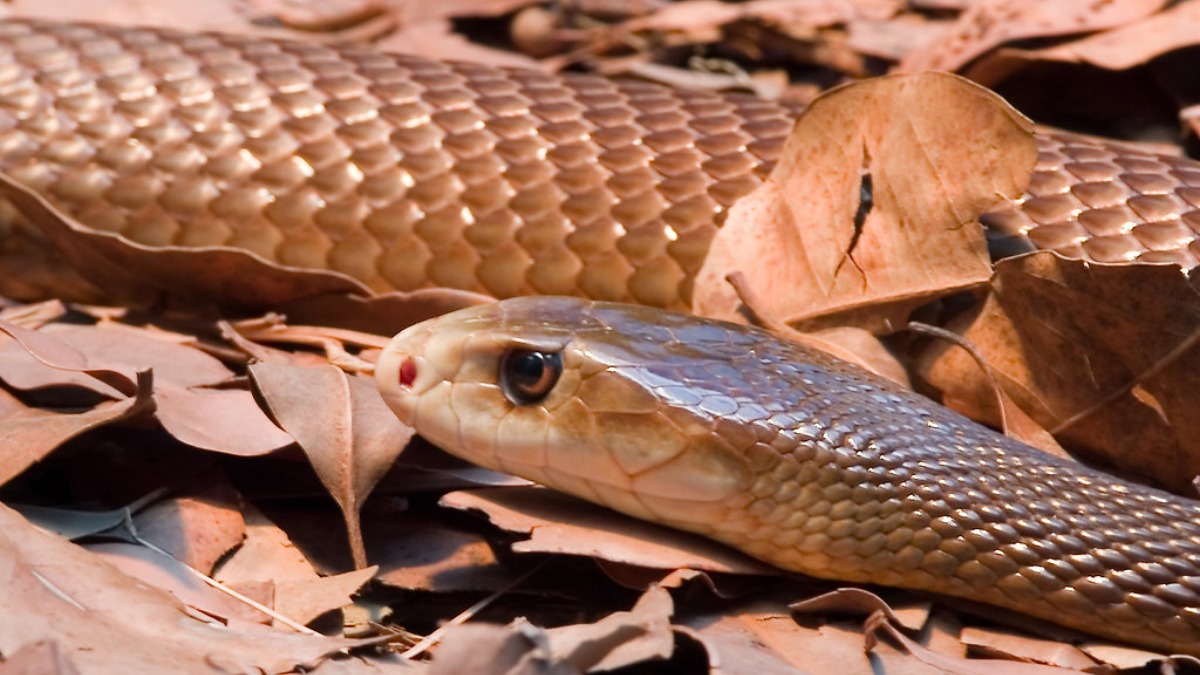

A TikTok creator named Koshi, who goes by the handle @solokoshi, recently filmed a snake slithering across the floor of his residential building at North Carolina Agricultural and Technical State University. The clip, as highlighted by BroBible, captures the snake moving quickly toward a dorm room door and slipping right through the gap at the bottom. The owner of that room came home not long after, unaware of what had gotten inside.
Koshi posted the video with the text overlay, “Whoever’s apartment this is, I’m so sorry, but you got a new friend,” and made his own stance clear in the caption, writing, “Absolutely not.” The video racked up over 1 million views as viewers reacted to the unexpected intruder. One user commented, “And you just watched that happen? So low down bruh,” while another wrote, “This is why you will not catch me on the first floor.” A third viewer noted, “Me watching this while living on the first floor knowing I got a lil gap under my door.”
Koshi did clarify he did not simply walk away. He responded to commenters, writing, “Fun fact I knocked on the door and nobody was home, then shortly after, I saw the guy come home and I told him. Hope this helps!”
Seeing a snake indoors is alarming, but most species in North Carolina are harmless
According to the North Carolina Wildlife Resources Commission, there are 37 species of snakes in the state. Of those, only six are venomous: the copperhead, cottonmouth, timber rattlesnake, pigmy rattlesnake, eastern diamondback rattlesnake, and the eastern coral snake. The remaining 31 species are nonvenomous.
If a snake enters a living space, experts recommend staying calm and keeping distance from the animal. Contacting local authorities is the safest option if the species is unknown, as an official agent from the North Carolina Wildlife Resources Commission can assist with identification and safe relocation. Attempting to harm the snake with sprays or poisons is strongly discouraged. Snakes are protected species in the state and play a significant role in the local ecosystem, a point echoed by a reptile expert’s viral warning about the harm of interfering with reptiles without proper knowledge.
The North Carolina Wildlife Resources Commission cautions that relying on head shape, pupil shape, or a rattling tail for identification is not always reliable. Instead, they recommend learning about venomous species by observing color, patterns, size, and range. Five of the six venomous species in North Carolina are pit vipers, which feature a heat-sensing pit located between the eye and the nostril used to detect warm-blooded prey in total darkness.
The most commonly encountered venomous snake in the state is the copperhead, largely because it is more likely to be found near human dwellings than other species. While a copperhead bite is painful, deaths are extremely rare and the venom is considered relatively mild. If a bite does occur, the protocol is to stay calm, call 911 or the North Carolina Poison Control at 800.222.1222, and identify the snake by sight only, keeping the affected limb level with the body. Common misconceptions like applying a tourniquet, cutting the wound, or using ice should be avoided. Amid broader public health warnings about dangerous substances, the DEA recently issued an alert on carfentanil, another reminder that poison control lines handle a wide range of emergencies beyond animal encounters.
To reduce the likelihood of a snake encounter, removing potential shelter for snakes and their prey is the most effective step. This includes clearing away debris such as scrap sheet metal, boards, and woodpiles, and raising stored materials off the ground. Finding a shed skin in an attic is often just a sign that a rat snake has passed through, as they are excellent climbers and responsible for most snake-in-house calls received by the Museum of Natural Sciences. Most snakes shed their skin three or more times a year, often in spring, so a shed skin does not necessarily mean the animal is still present.









Published: Apr 30, 2026 07:00 am