




Cracking open an egg usually does not come with much uncertainty. But finding something unexpected inside can quickly turn an ordinary grocery purchase into a question about whether the food is safe to eat.
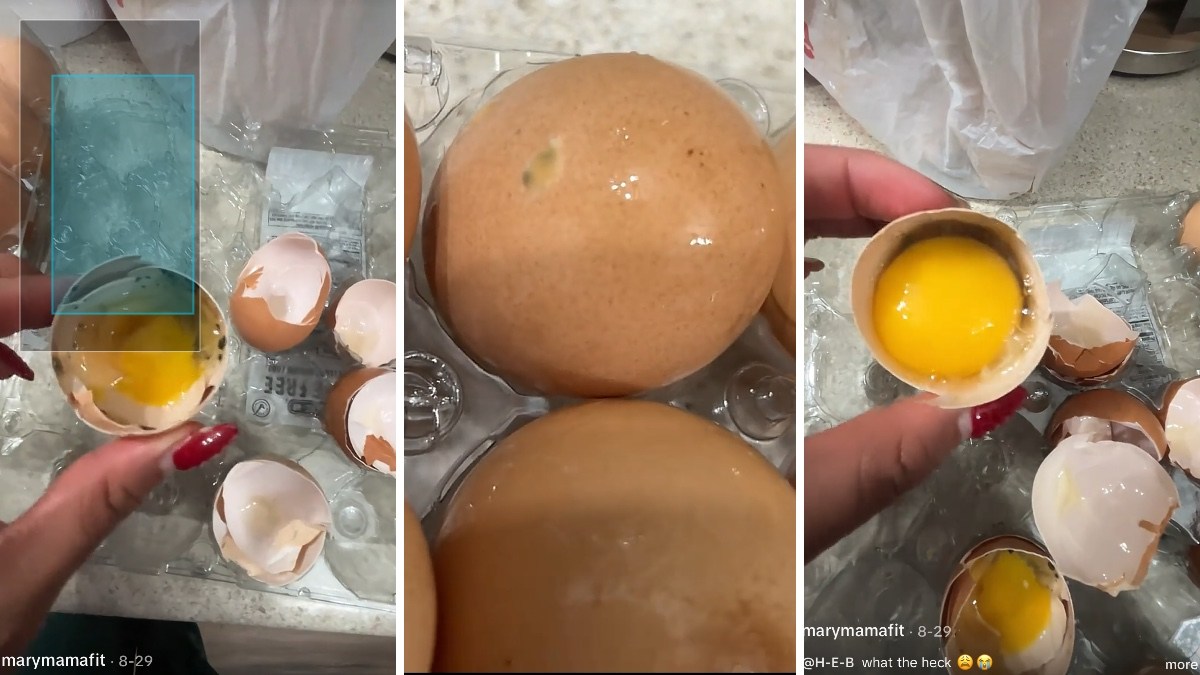
According to TikTok creator Mary Mama Fit (@marymamafit), she cracked open eggs from an H-E-B carton and noticed dark material inside that made her wonder if she was looking at mold. She shared the discovery online, questioning what could have caused the unusual spots.
The video shows the dark material inside the cracked eggs, but it does not establish what it actually was. While the spots may look like mold, there is no independent confirmation that the substance was mold or what caused it to appear inside the eggs.
Another egg appeared to have the same strange spots
The discovery did not appear to be limited to one egg. In a follow-up video, she cracked open more eggs from the same carton, with at least one appearing to contain similar dark material, adding to the unusual egg discoveries that can catch shoppers off guard.
In the caption for her first video, she wrote, “@H-E-B what the heck Eggs full of molddd? Or what happened, cracked two didn’t want to keep going.” She later said H-E-B was supposed to email her about the issue but that she had not received a response by August 29.
The USDA’s Egg Grading Manual classifies moldy eggs as a type of egg loss and notes that mold growth can occur inside an egg. That confirms the phenomenon itself is possible, although it does not identify the material shown in this particular video.
If an egg is confirmed to have mold, the USDA classifies it as inedible. Removing the visibly affected portion is therefore not a reason to assume the rest of the egg is safe to eat.
Unexpected food finds can also become a safety concern when shoppers discover them only after taking a bite, as with an unexpected food discovery involving a Walmart protein bar that one shopper noticed only after already eating part of it.
The FDA notes that even clean, uncracked eggs can contain Salmonella, which is why consumers are advised to buy refrigerated eggs, avoid cracked shells and keep eggs properly refrigerated at home.
That guidance is separate from this particular incident, and there is no evidence that Salmonella caused the dark material shown in the videos. One unusual carton is also not enough to establish a broader problem with H-E-B eggs.
For now, the material shown in the videos has not been independently identified. Any response or explanation from H-E-B could help clarify what the shopper found and whether the eggs had a documented issue.









Published: Sep 7, 2026 07:00 pm