



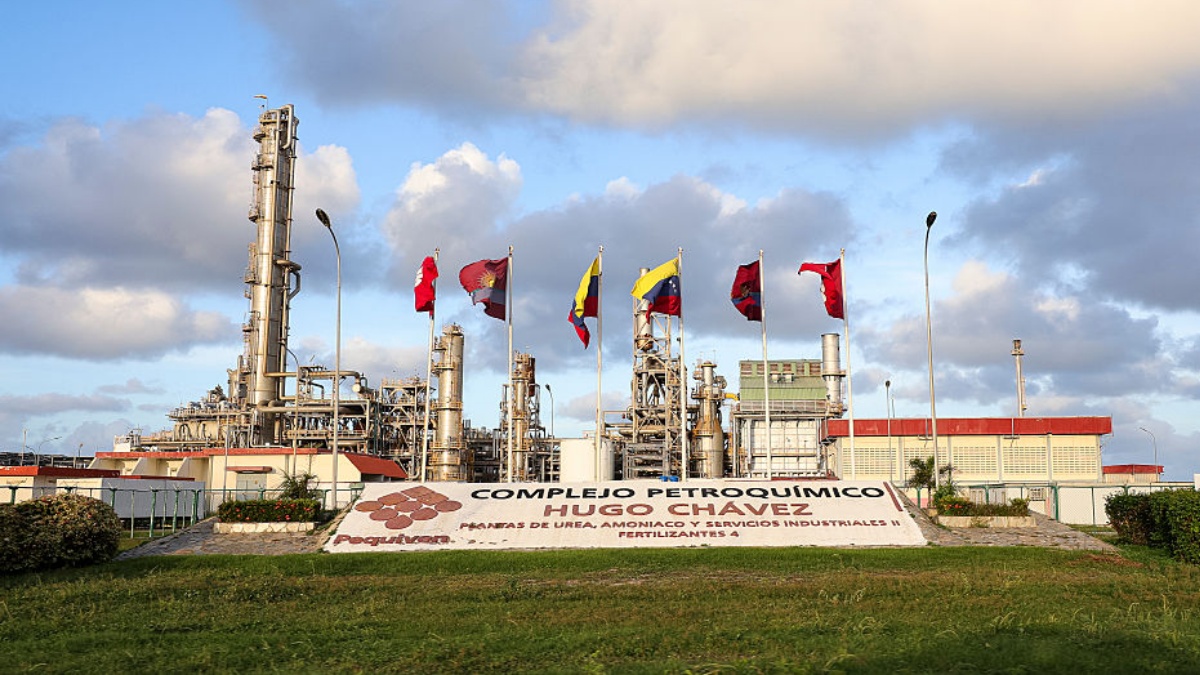

Venezuela’s parliament has advanced a sweeping proposal to reform the country’s oil industry, marking the first serious departure from the nationalization model put in place under former President Hugo Chavez. As reported by Al Jazeera, the initiative is intended to loosen state control and expand private sector participation in a bid to revive production and attract foreign investment.
The proposal to amend Venezuela’s Hydrocarbons Law passed its first reading on Thursday. The push came just weeks after the abduction of former President Nicolas Maduro by the United States, an event that rapidly reshaped political calculations and sparked interest from international energy companies looking for a reset in Venezuela’s oil policy.
At the center of the reform is a clear break with the 2006 nationalization framework. The state-owned oil company PDVSA would lose its exclusive right to commercialize crude, allowing private companies to sell oil directly. Firms would also be permitted to open bank accounts in any jurisdiction or currency, a change aimed at easing international operations and financing.
The reform promises flexibility but raises transparency concerns
Under the proposed law, PDVSA would retain majority ownership in joint ventures, but minority partners could take over technical and operational management. The bill also seeks to repeal rules that reserved ancillary oil services for the state, enabling private companies to subcontract extraction activities as long as they assume the costs and risks, a structure that echoes how emergency coordination unfolded during a recent sunken cargo ship rescue effort.
To encourage new investment, especially in underdeveloped areas, the proposal lowers royalty payments from 30 percent to as little as 15 percent. Supporters argue the reduced rate is necessary to make projects economically viable after years of declining output and underinvestment.
The broader political context has intensified scrutiny of the reform. Following Maduro’s abduction, the White House and US Energy Secretary Chris Wright announced a $500 billion energy agreement between Washington and Caracas.
Executives from multinational firms later raised concerns with President Donald Trump about unresolved multibillion-dollar claims from companies such as ExxonMobil and ConocoPhillips stemming from the 2007 nationalization. The draft law attempts to address those risks through arbitration and mediation mechanisms, amid broader scrutiny of federal authority highlighted by a recent case involving seized reporter devices.
Despite interest from the business community, the process drew sharp criticism. The draft legislation was released only hours before lawmakers met for debate, prompting opposition parties to boycott the vote and argue that major energy reforms require broad consultation in a country with the world’s largest proven oil reserves.
Economists remain divided. Some warn the proposal lacks clarity on private ownership limits, while others say formalizing the so-called Chevron model could boost output. Venezuela has already received a $300 million payment from US crude sales, and analysts expect oil revenues to rise by at least 30 percent this year if the law advances and sanctions relief continues.









Published: Jan 23, 2026 05:45 pm