



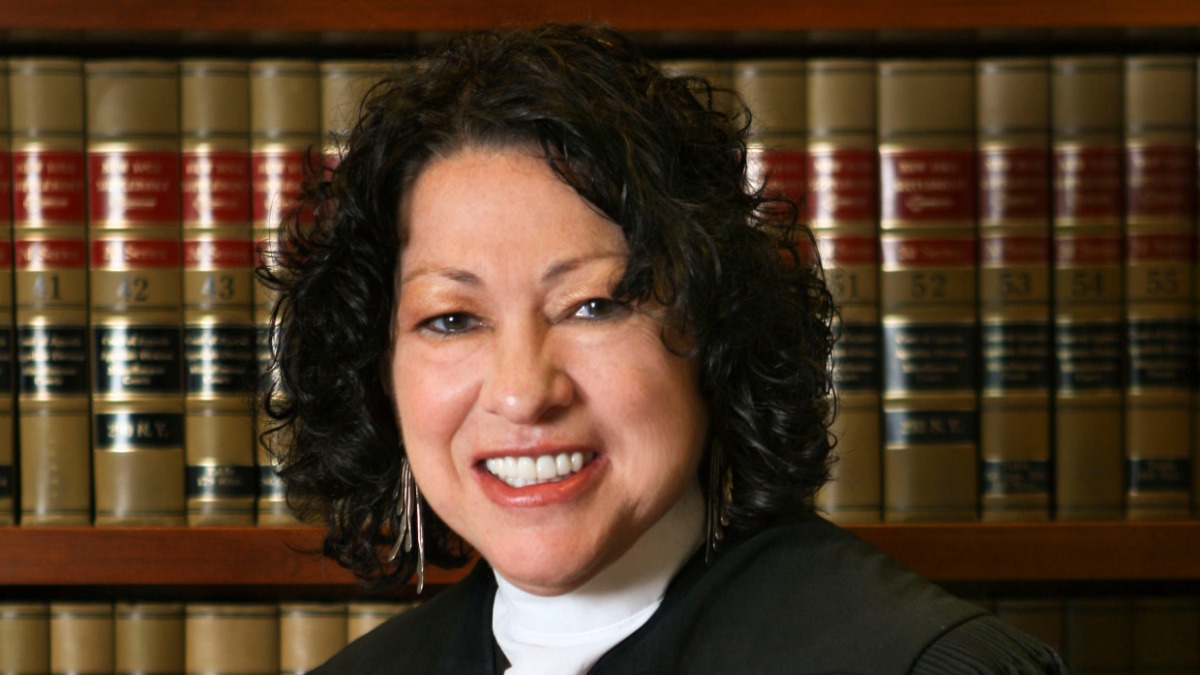

Justice Sonia Sotomayor issued a public apology on Wednesday, April 16, 2026, for remarks she made about Justice Brett Kavanaugh’s concurring opinion in a recent immigration case. Her statement, released by the Court, expressed regret for comments she described as “inappropriate” and “hurtful,” and confirmed she had apologized directly to her colleague. Public retractions of this kind are rare at the Supreme Court level.
The controversy stems from an appearance Sotomayor made on Tuesday, April 9, 2026, at the University of Kansas School of Law. During that event, she openly criticized Kavanaugh’s view that federal law enforcement stops to determine a person’s legal status would be merely “temporary” and reasonable. As detailed by ABC News and Newsweek, Sotomayor went further, making pointed remarks about Kavanaugh’s background. “I had a colleague in that case who wrote, you know, these are only ‘temporary stops.’ This is from a man whose parents were professionals. And probably doesn’t really know any person who works by the hour,” she said.
Her criticism was directed at Kavanaugh’s concurring opinion in a Supreme Court decision that lifted restrictions on aggressive immigration enforcement tactics by federal agents in central California. Those tactics had previously drawn criticism from opponents who labeled them racial profiling. The Court’s majority did not formally explain its decision to lift the restraining order against the ICE strategy, but Kavanaugh penned a separate concurrence to lay out his reasoning.
She wasn’t just criticizing a legal opinion
In his concurrence, Kavanaugh wrote that “apparent ethnicity” could be a “relevant factor” in establishing probable cause to detain an individual. He also stated his expectation that any federal law enforcement stop for status determination would be “temporary” and reasonable, adding that individuals who are legally in the country “may promptly go free after making clear to the immigration officers that they are U.S. citizens or otherwise legally in the United States.” Amid broader debate over Republican efforts to fund ICE through budget reconciliation, the Supreme Court’s decision drew fresh scrutiny over how enforcement standards are being interpreted at the highest level.
Sotomayor dissented from the Court’s decision, joined by Justices Elena Kagan and Ketanji Brown Jackson. Her dissent argued, “We should not have to live in a country where the Government can seize anyone who looks Latino, speaks Spanish, and appears to work a low-wage job.” She added, “Rather than stand idly by while our constitutional freedoms are lost, I dissent.”
During the Kansas appearance, Sotomayor elaborated on the financial toll these detentions take on hourly workers. “Those hours that they took you away, nobody’s paying that person,” she said. “And that makes a difference between a meal for him and his kids that night and maybe just cold supper.” She also clarified that her dissent was not personal.
“I was not talking as a Latino justice. I was talking about a justice who respects precedent. And I was explaining why that precedent is being violated.” She concluded that Kavanaugh’s opinion glossed over the significant interests of U.S. citizens and individuals with legal status, reducing them to a single sentence, and stated flatly: “That blinks reality.”
The personal nature of her public criticism drew immediate calls for an apology from allies of Justice Kavanaugh. The wider conversation around immigration enforcement and civil rights has continued to intensify at the public level, with a record number of Americans now supporting the abolition of ICE amid growing scrutiny of federal enforcement practices.
In her apology statement, Sotomayor said, “At a recent appearance at the University of Kansas School of Law, I referred to a disagreement with one of my colleagues in a prior case, but I made remarks that were inappropriate. I regret my hurtful comments. I have apologized to my colleague.”
The apology came shortly after Sotomayor had spoken at the University of Alabama about the importance of maintaining collegiality among the justices, saying that while relationships on the bench were not always “friendly,” they should at least remain “civil.” The justices are slated to return to the bench next week for their April session of oral arguments.









Published: Apr 15, 2026 07:45 pm