



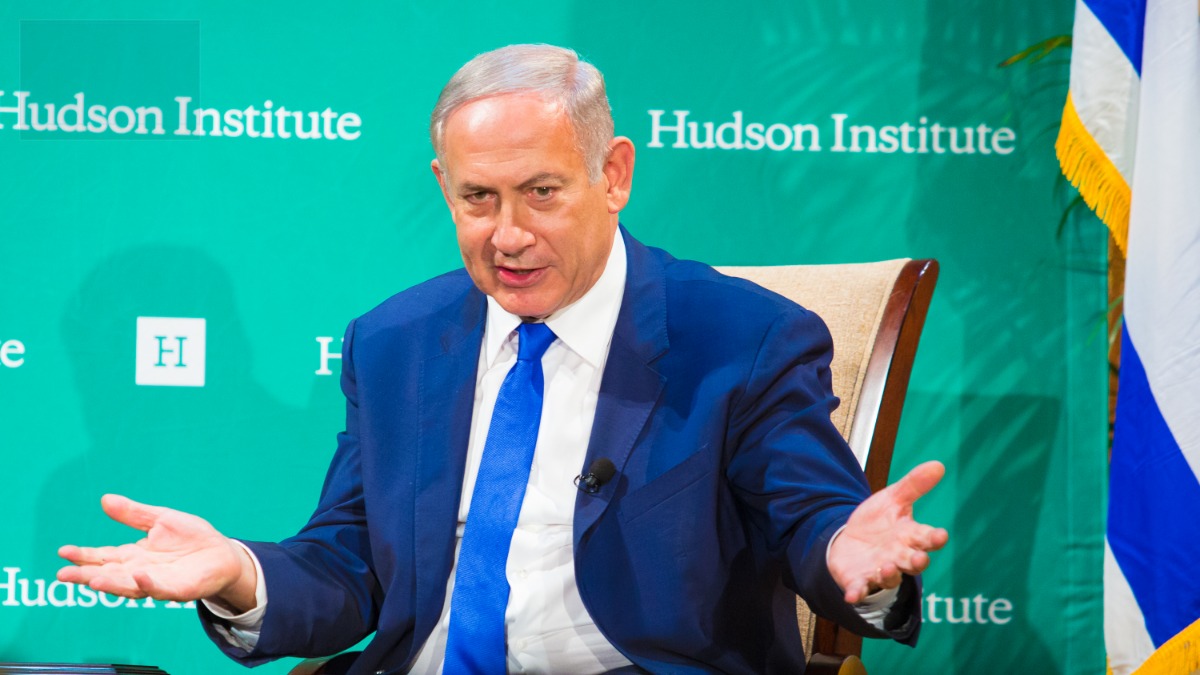

Israeli Prime Minister Benjamin Netanyahu recently shared that he has been undergoing treatment for prostate cancer, The Hill reported. This is a disclosure he intentionally delayed for two months to avoid releasing medical news during the peak of military operations against Iran.
Netanyahu took to X to clarify that the condition was caught at a very early stage, noting that the malignant tumor had not spread whatsoever. He explained that he opted for targeted treatment, which involved a series of short follow-up sessions, after doctors identified a tiny spot during a routine checkup. This discovery came about a year and a half after he underwent a successful surgery to address an enlarged benign prostate.
The timing of this revelation is particularly notable given the political climate in Israel. Netanyahu is currently navigating a challenging period, as his approval ratings have seen a consistent decline throughout the ongoing conflict. According to an April 11 survey conducted by the Hebrew University, his approval rating has dipped to 34 percent, a noticeable drop from the 40 percent he held when the war began in late February.
In his post on X, Netanyahu addressed the reasoning behind his silence regarding his health
The same survey indicated that only 10 percent of Israelis currently view the military campaign against Iran as a success. This shift in public sentiment occurs against the backdrop of upcoming legislative elections, which are scheduled for late October.
“Today, my annual medical report was published. I requested to delay its publication by two months so that it would not be released at the height of the war, in order not to allow the Iranian terror regime to spread even more false propaganda against Israel,” he stated. He also used the moment to encourage others to be proactive about their own health, noting that his doctors informed him that prostate issues are very common for men in his age bracket.
He framed his decision to treat the tumor immediately as a reflection of his general approach to life and leadership. “You already know me. When I’m given information in time about a potential danger, I want to address it immediately. This is true on the national level and also on the personal level,” he wrote.
The broader context of the war with Iran remains complex and difficult. While the military campaign was initially conceived as a way to secure a defining victory, more than six weeks of conflict have passed without translating that military power into the political gains Netanyahu initially anticipated.
Although Israel has utilized significant firepower, including heavy airstrikes, analysts suggest that the results have not been as decisive as the public was led to expect. Senior researchers, such as Danny Citrinowicz from Israel’s Institute for National Security Studies, have described the current situation as a strategic failure, noting a significant gap between the initial promises of the campaign and the reality on the ground.
Critics and political analysts argue that the conflict has expanded into a wider confrontation with global implications, rather than the swift three-week operation that some officials initially envisioned. Despite the loss of several senior leaders within the opposing forces, Iran remains defiant, and its nuclear and missile programs have not been dismantled. The conflict has also proven to be an expensive endeavor, with the Israeli finance ministry reporting that the war effort has already incurred roughly $11.5 billion in budgetary costs.
As the October elections approach, Netanyahu faces the difficult task of convincing voters that the high cost and duration of the war have been justified. While he has publicly maintained that Israel has emerged stronger and has successfully degraded the nuclear and missile capabilities of its adversaries, skeptical voices remain.
Former advisers have pointed out that the reliance on airpower and targeted strikes, while tactically impressive, has not produced a durable strategic endgame. With security challenges persisting in Gaza, the West Bank, and along the northern border with Lebanon, the political landscape remains as volatile as ever.







Published: Apr 24, 2026 03:00 pm