



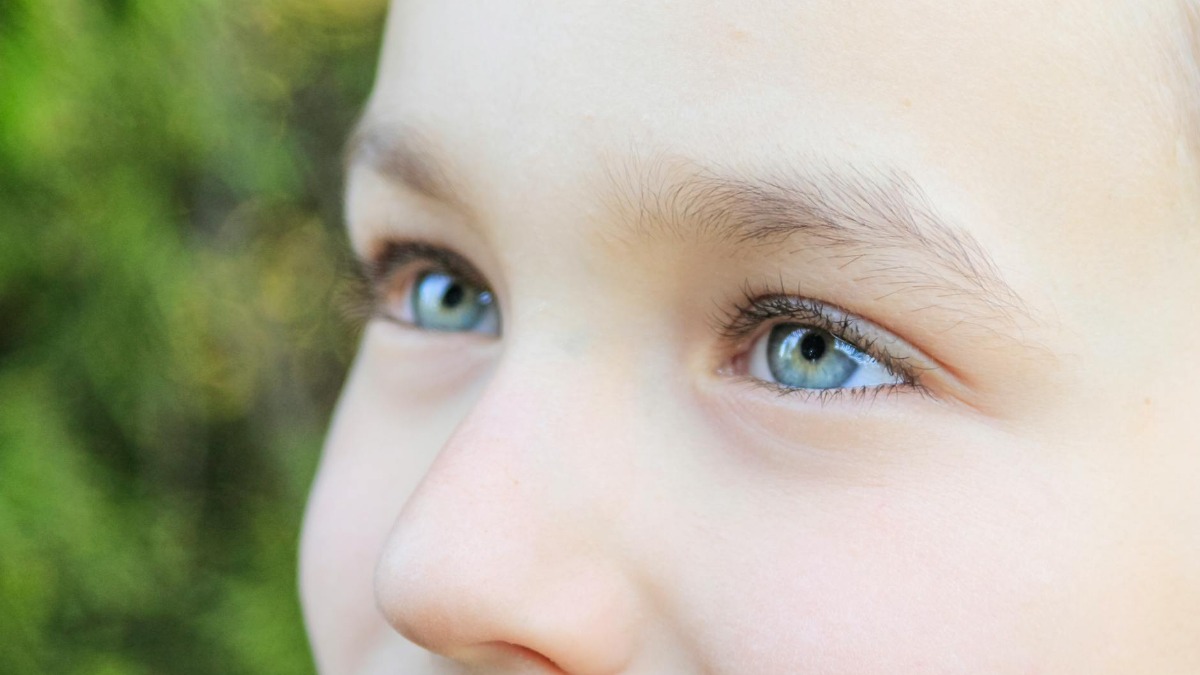

A family birthday celebration turned into the beginning of a long and frightening medical journey for four-year-old Isaac and his mother, Maria Simeonidis. While Isaac was watching Paw Patrol with his older brother to mark his third birthday in June 2024, Maria noticed a strange white glow in her son’s right eye. It was a detail that might easily have been dismissed, but it set off a chain of events that would reshape the family’s life entirely.
The concern deepened when Maria pointed out the glow to her partner, Matthew Comley, as detailed by LADbible. Matthew revealed he had already noticed the same thing in Isaac’s right eye, which only added to Maria’s alarm. “I immediately thought, s—, how does he know what eye I mean?” she recalled. “I thought no matter what it is, it definitely isn’t anything good.”
The family acted quickly, visiting a local optician who confirmed something was visible at the back of Isaac’s right eye. He was referred first to the Royal Bournemouth Hospital and then to the specialist retinoblastoma centre at the Royal London Hospital, where the atmosphere during the examination left Maria shaken. The doctor brought in an assistant mid-examination without a word, and Maria said the quiet that followed was deeply unsettling. Though no official diagnosis could be given on the spot, the doctor told her that if she were to ask his professional opinion, he was certain it was retinoblastoma.
What Isaac’s family faced after the diagnosis confirmed their worst fears
The confirmation at the Royal London Hospital hit the family hard. Maria recalled how she began crying immediately, adding that she had feared the worst but had also been told by others how rare the condition was. A particularly painful moment came when Isaac, whose pupils had been dilated for the examination, asked why she was crying because he could not see her face clearly.
Isaac began systemic chemotherapy, and there was briefly a moment of relief when he was given the all-clear. That hope was short-lived, however, as a follow-up check revealed portions of the tumour remained. Plaque treatment followed, which Maria described as leaving Isaac in significant pain and discomfort. Three months later, he relapsed, leaving the family with few remaining options. Awareness around early diagnosis of rare conditions has grown in recent years, in part through cases like a woman whose meningitis symptoms were mistaken for the flu and went undetected until serious damage had been done. For Isaac, Maria ultimately made the decision to have his right eye removed, describing it as a hard pill to swallow but one she felt was right after such a prolonged and painful fight to save it.
Today, Isaac is five years old and is described as a happy and confident boy who enjoys playing with dinosaurs and monster trucks. He has been fitted with a prosthetic eye and has adapted well, though he remains cautious in unfamiliar locations because he is aware of his reduced field of vision. His resilience throughout the ordeal has been widely noted.
Retinoblastoma is a rare form of eye cancer that primarily affects children under the age of six, with around 40 to 50 cases diagnosed in the UK each year, according to the Childhood Eye Cancer Trust. It develops in the retina, the light-sensitive lining at the back of the eye. The condition carries one of the highest survival rates of all childhood cancers in the UK, at approximately 98 percent, but early detection remains the most critical factor in achieving a positive outcome.
Common symptoms include a white glow in the eye that may appear in flash photographs or certain lighting conditions, as well as a squint. Cases like Isaac’s, where symptoms first appeared while a child was simply sitting in front of the television, underscore why parents are encouraged to act quickly if anything looks unusual. Separately, delayed diagnoses of rare conditions have continued to draw attention across the UK, including a young woman whose rare cancer was dismissed as unrelated to her true condition for years. Richard Ashton, Chief Executive of the Childhood Eye Cancer Trust, urged parents and health professionals alike to take any warning signs seriously and to seek a GP or optician appointment without delay.






Published: May 11, 2026 07:30 pm