



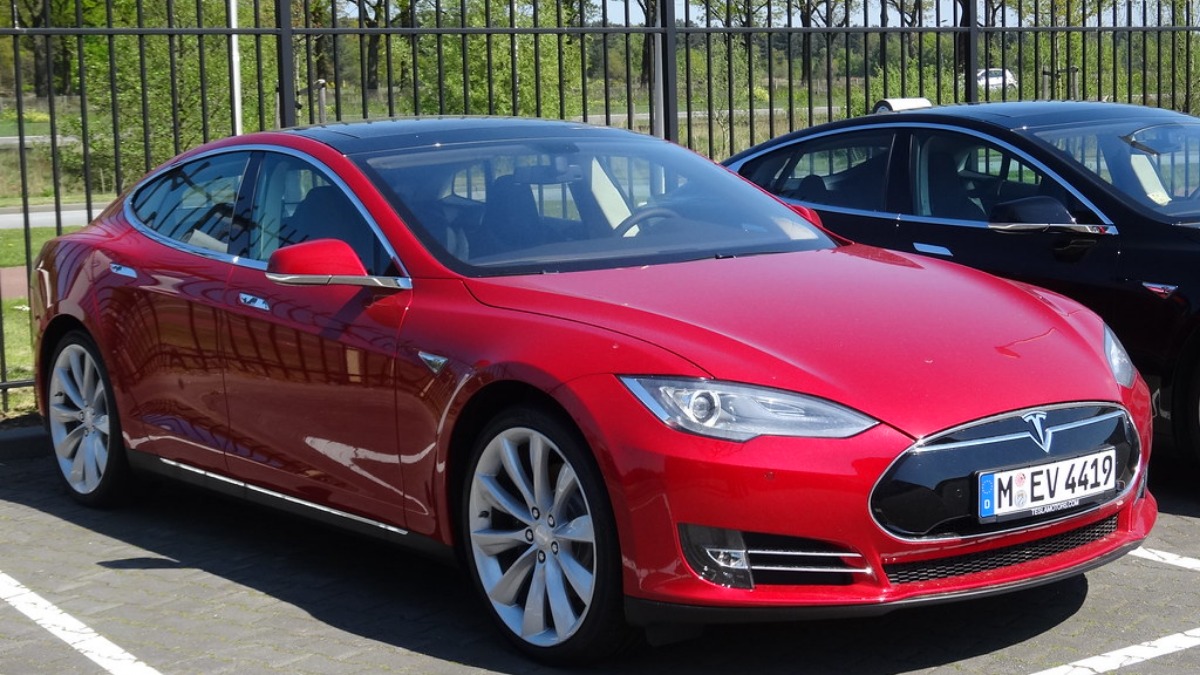

Tesla is currently pushing to get its Full Self-Driving technology approved across Europe, but the company is hitting some major turbulence. The EV maker has been presenting its own self-published safety statistics to regulators in Sweden and the Netherlands, hoping to prove that the system is safe enough for wider use. However, these figures are drawing sharp criticism from independent traffic-safety researchers who argue that the data amounts to nothing more than misleading marketing, Reuters reported.
This push for European expansion comes at a critical time for the company. Tesla is working hard to regain market share in the region after seeing sales drop last year. The decline in popularity followed protests regarding the political activities of CEO Elon Musk, particularly his public embrace of far-right political parties in Europe. With Chinese EV manufacturers making steady progress in the region, Tesla clearly views FSD approval as a vital component for its future vehicle sales growth.
The strategy involves convincing regulators that the technology is far superior to human drivers. In a November 2024 letter sent to the Dutch road regulator RDW, Tesla provided a link to its safety report and claimed that “increased usage” of FSD “leads to safer roads.” The RDW eventually granted approval for FSD in the Netherlands in April after more than a year of discussions. Now, the agency is seeking EU-wide approval on behalf of the company.
Despite this win, the actual data being used to support these claims is under heavy scrutiny
A recent examination found that the statistics Tesla uses to claim its driver-assistance feature is up to 10 times safer than human drivers are built on flawed comparisons. For instance, the company has been comparing crash rates in FSD-piloted Teslas that triggered airbag deployments against a general U.S. crash rate for all vehicles that includes much less severe accidents.
Furthermore, Tesla compares its own cars to the average U.S. vehicle, which is significantly older. Because newer cars naturally come with better safety features that reduce accidents, this comparison distorts the final results.
The situation became even more contentious when Ivan Komusanac, a Tesla policy manager, reached out to Swedish regulators shortly after the Dutch decision on April 10. In his email, he included a slide presentation claiming that Teslas using FSD can travel more than seven times farther between crashes than the average U.S. human driver.
The presentation even suggested that FSD could have potentially saved 32,000 lives and prevented 1.9 million injuries. Researchers have labeled these figures as highly misleading. They point out that these claims assume every single vehicle in the U.S., including heavy freight trucks and motorcycles, would be replaced by an FSD-enabled Tesla car.
The European Transport Safety Council has expressed clear concern over the use of these numbers. Dudley Curtis, a spokesperson for the group, stated that his organization is “certainly concerned” that Tesla presented “unreliable safety data” to regulators. He suggested that if the company wants to make such bold safety claims, it should “give the data to a university, have it independently verified by a qualified researcher, and then let’s talk.”
While the Dutch regulator RDW did not address the specific issues identified with the statistics, it emphasized that the agency “does not rely on marketing claims or external statistics” when making its decisions. Instead, RDW stated it performs its own “tests, analyses and verifications” on public roads and tracks. RDW also noted that Tesla “collected a lot of data” during the process and the agency “validated, tested and audited all of this data.” However, the agency did not provide details on what specific data was collected or what exactly was measured.
Other regulators are also navigating the pressure. In Norway, the public roads administration had to respond to numerous Tesla drivers who were citing the company’s safety reports while urging for faster approval. Stein-Helge Mundal of the Norwegian Public Roads Administration clarified that Tesla’s figures “are self-produced,” which makes it “difficult to find correlation with the authorities’ accident statistics.”
Meanwhile, in Greece, the transport ministry indicated it aims to approve the technology, citing data “from the other side of the Atlantic” that showed “this system ultimately leads to a very significant drop in accidents.”
The road ahead for Tesla in Europe remains complex. To make FSD legal across the entire EU, representatives of 55% of the member states, representing 65% of the bloc’s population, must cast a “yes” vote in the coming months. Until then, the company will have to continue navigating these individual regulatory hurdles while dealing with the fallout over its controversial safety claims.

Published: Jun 15, 2026 05:30 pm