



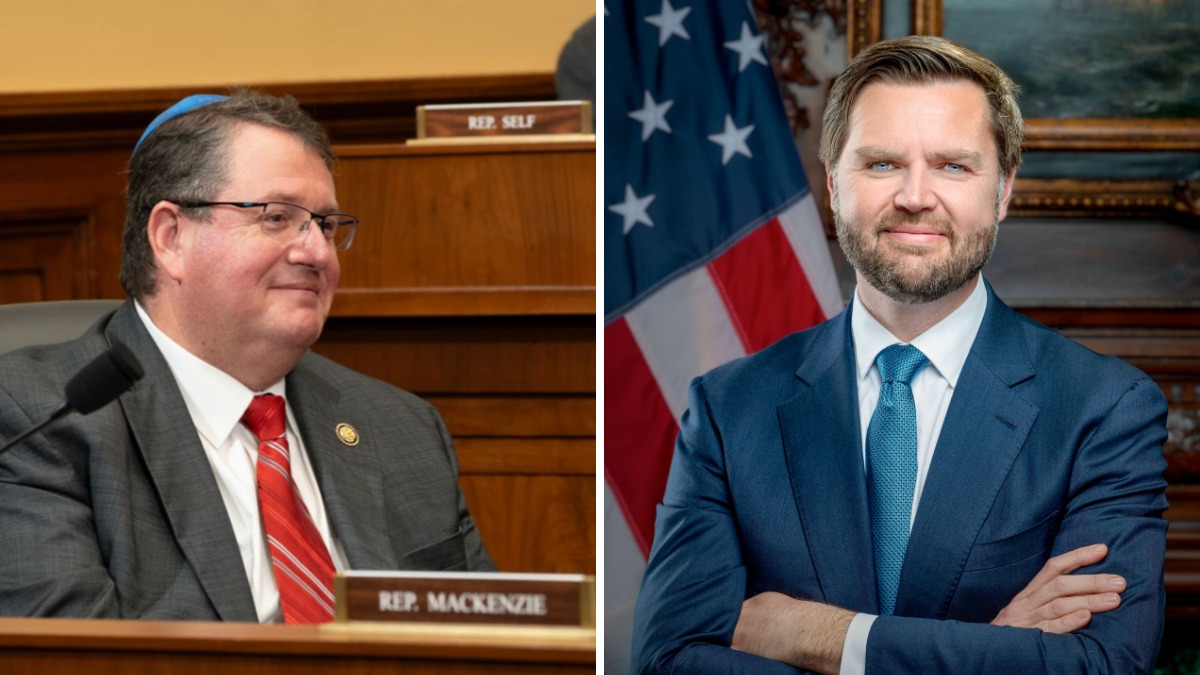

Republican Representative Randy Fine of Florida expressed his strong disapproval regarding recent comments made by Vice President JD Vance. According to The Hill, during a segment on the conservative network Real America’s Voice, Fine explicitly stated, “I thought JD’s comments yesterday were absolutely inappropriate and frankly disgusting.”
The tension stems from a warning Vance directed toward Israeli leadership regarding a memorandum of understanding recently signed by President Trump and Iran. This agreement, finalized on Wednesday, established a 60-day window for peace negotiations and mandated a halt to hostilities, including the conflict involving Lebanon. Following the signing, reports surfaced suggesting that Israeli Prime Minister Benjamin Netanyahu was unhappy with the deal.
“If I was in the Cabinet of the Israeli government, I might not be attacking the only powerful ally that I have anywhere left in the entire world,” Vance said during the briefing. He further emphasized the level of American support provided to the region, noting, “The other thing that I would say is that over the last three months, two-thirds of the defensive weapons that protected your homeland have been built by American hands and paid for by American tax dollars.”
Vance suggested that Israeli officials should remain mindful of their international standing
Fine, who is Jewish, pushed back against the implication that Israel relies solely on the United States for its existence or survival. He suggested that the Vice President would be wise to go back and learn his history. Fine argued that the state of Israel was not created by the United States, nor is it funded by the country except in some small way. Instead, he asserted that it was created in the blood and sweat and tears of the Jewish people rising out of the Holocaust.
The administration’s stance has faced scrutiny from other notable conservative voices as well. Fox News host Brian Kilmeade expressed that he was shocked by the criticism leveled at Israel by the Vice President. Kilmeade added that he wished the Vice President would be that tough with Iran.
Similarly, former GOP House Speaker Newt Gingrich questioned the administration’s focus during this period of conflict. On Friday morning, Gingrich posted on social media to ask why Israel is receiving blame for attempting to protect its citizens from Hezbollah attacks. He further wrote, “Iran funds and arms hezbollah, encourages them to kill israelis in israel and then blames israel for defending its own citizens. We should be focusing our anger on the iranian dictatorship not on a democracy fighting to protect its citizens.”
The conflict in the region remains complex, as Israel has been conducting military actions against Hezbollah since the early stages of the war. Prime Minister Benjamin Netanyahu confirmed on Friday morning that the Israeli military struck Hezbollah with force on Thursday evening following a heinous attack from the militant group.
Despite these military actions, the administration has signaled frustration over the timing of such events. Vance mentioned during his briefing that the President has grown frustrated because the parties appear to be on the cusp of a major breakthrough in the agreement, only for a major explosion to occur in a civilian population center in Beirut. Vance concluded that this is not acceptable and that the administration has asked for closer coordination to prevent such occurrences.
While Vance noted that reports of Netanyahu fuming over the memorandum are not reflective of the conversations he has had with the Prime Minister, the public friction between the two administrations is becoming increasingly apparent. President Trump and Netanyahu have seen their disagreements spill into the public eye, with the President criticizing the Israeli leader for military actions that he believes threaten the stability of the deal with Iran.
Netanyahu has acknowledged that he and the President do not always see eye to eye, maintaining his commitment to prioritizing the security of Israel. As the 60-day negotiation period moves forward, it is clear that the diplomatic path ahead remains fraught with significant challenges and differing perspectives on how to best manage the security landscape in the Middle East.









Published: Jun 19, 2026 04:00 pm