



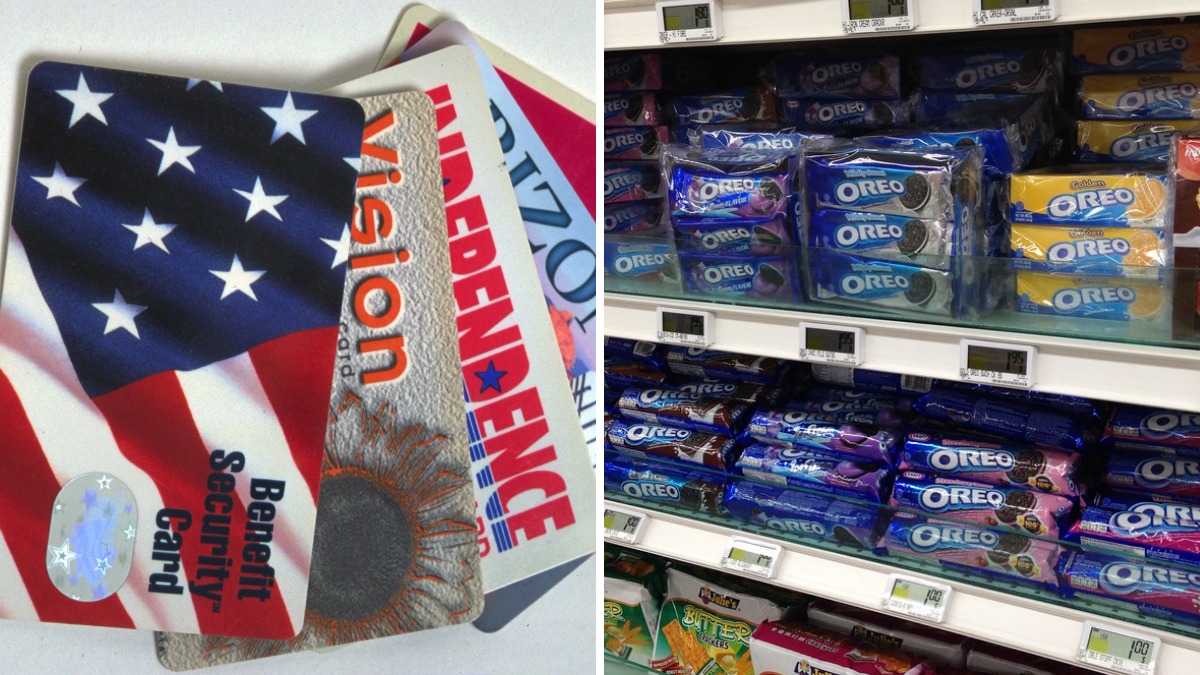

A woman’s video complaining that her EBT card would not cover Oreos and ice cream has gone viral, as reported by the Daily Dot. The clip was reshared on X by @ImMeme0 and drew a wave of reactions from users who had differing views on the situation. In the video, she said “I’m tired of going to the store and my EBT card not working, dammit.” She listed cookies, Oreos, fruit snacks, and ice cream as items she could no longer purchase.
She clarified that the snacks were for herself rather than her children. Several viewers pointed out an irony in the situation. While her EBT card blocks her from buying processed versions of these items, she can still purchase the raw ingredients to make them from scratch. The restrictions she experienced are tied to new SNAP purchase rules.
According to Propel, as of June 22, a court ruling allowed SNAP purchase restrictions to take effect in certain states. SNAP, or Supplemental Nutrition Assistance Program, is a federal program formerly known as food stamps. It is designed to help low-income households afford groceries. EBT cards are the payment method used to access those benefits.
Which states are affected and how big the program is
The new rules specifically ban recipients from using benefits to buy sodas, chips, cookies, energy drinks, candy, certain frozen convenience foods, and other processed items. Oreos, ice cream, and fruit snacks all fall under this category, which is why her card declined at checkout. The state she lives in may also be a factor, since the restrictions only apply in certain states that have been granted waivers by the federal government.
Government spending debates have been a recurring theme online, including questions raised about how taxpayer money is being used at the federal level. According to the USDA Food and Nutrition Service, the states affected by SNAP Food Restriction Waivers include Arkansas, Indiana, Montana, Oklahoma, Virginia, Colorado, Iowa, Nebraska, South Carolina, West Virginia, Florida, Kansas, Nevada, Tennessee, Wyoming, Hawaii, Louisiana, North Dakota, Texas, Idaho, Missouri, Ohio, and Utah.
The waivers are intended to promote healthier eating habits among SNAP recipients and encourage purchases of more nutritious foods. SNAP is the largest federal nutrition assistance program in the United States. According to USDA data, about 42.1 million people received SNAP benefits in fiscal year 2025, accounting for 12.3% of the US population.
Federal SNAP spending totaled $99.8 billion in fiscal year 2024, with benefits averaging $187.20 per participant per month. About 39% of SNAP participants are children, and 83% of all SNAP benefits go to households that include a minor child, an older adult, or someone with a disability, according to a 2023 USDA report. In 2025, Congress passed legislation that cut SNAP funding and tightened eligibility rules as part of a broader federal spending bill.
The Congressional Budget Office estimated those changes would reduce federal SNAP spending by $186.7 billion over the next decade.







Published: Jul 1, 2026 02:00 pm