



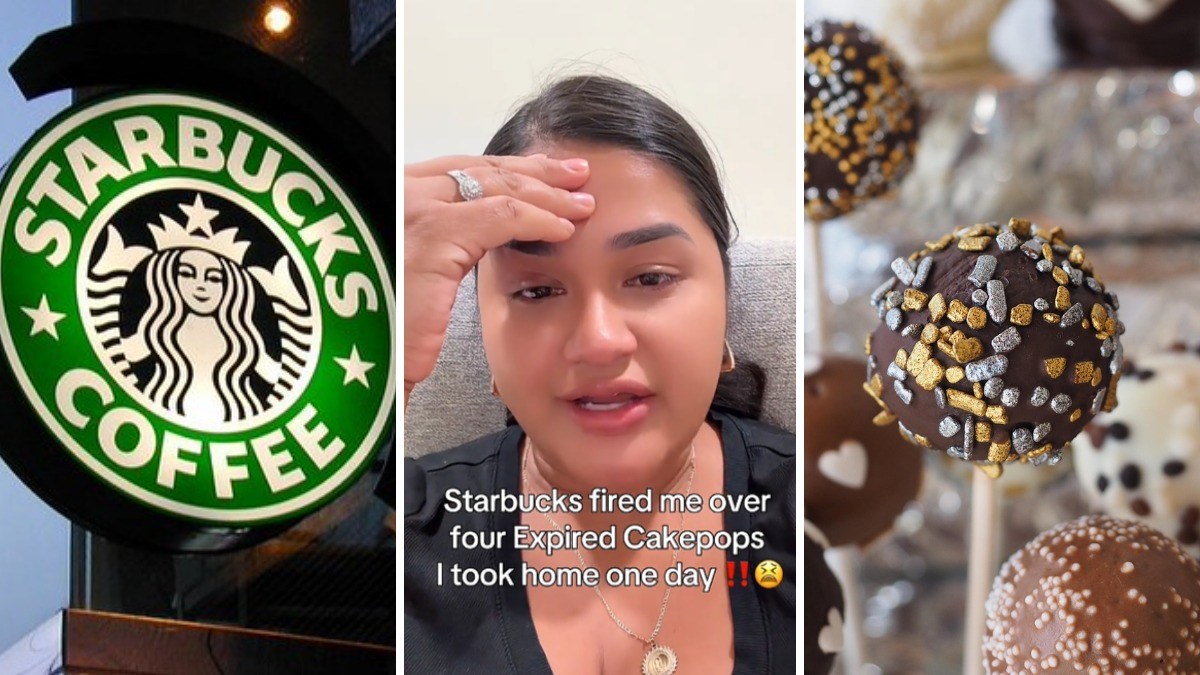

A Starbucks shift supervisor recently lost her job after taking home a small collection of expired pastries intended for her children. As reported by Daily Dot, the incident, which involved four cake pops, a danish, and a bagel, has sparked a significant conversation online about corporate policies regarding waste and employee conduct. Starbucks has not publicly responded to the claims.
The former employee, known on TikTok as @claraajanet, shared the details of her termination after working at the company for just over a year. The sequence of events began when the employee decided to take the items from the display case at the end of their shelf life. When management discovered the action, they confronted her and requested that she reimburse the company for the goods.
Although the items were allegedly valued at 50 dollars, the store requested a partial payment of 20 dollars. She agreed to pay this amount. Unfortunately, the payment did not guarantee her continued employment, and she was let go shortly thereafter.
Why she believes the company overreacted
Reflecting on the experience, she told her followers, “Big corporations like Starbucks literally will cry over four cake pops.” She expressed a belief that the company’s reaction was motivated by tax incentives rather than the actual value of the food. She claimed that while the company publicly states it donates leftover food, items are often disposed of and written off as tax deductions.
While this is a claim that cannot be independently verified, it reflects a common sentiment among workers who feel that corporate bottom lines are prioritized over human needs. A similarly petty workplace dispute unfolded when a manager retaliated over a departing employee’s meal, leaving out only him during a team lunch.
The loss of her job was especially difficult because she was participating in a program where Starbucks sponsored her courses at Arizona State University. This benefit is a major draw for many employees, and losing it mid-semester is a tough blow for anyone trying to further their education. She noted that she had been planning to leave the company eventually to open her own coffee shop, but the sudden termination disrupted those plans.
Regarding the nature of her firing, she stated, “You can literally get fired from a big company like this for simple things that don’t make sense.” She concluded her thoughts by suggesting that people should focus on their own ventures and strive to become their own bosses. When looking at how these policies function in a broader sense, it is clear that many large companies maintain strict guidelines regarding the handling of products.
Under at-will employment, which applies in every U.S. state except Montana, an employer can generally terminate a worker for any reason that is not illegal, including a policy violation as minor as taking expired food without approval. For instance, policies at various food service establishments explicitly state that giving away food or taking products off the premises without management approval is considered theft.
More than 40 states recognize a public policy exception to at-will termination, though not all states do, so whether any legal challenge could apply depends heavily on where the firing took place. These rules are consistently enforced to protect the company’s assets, regardless of whether the items are marked as expired or destined for the trash.








Published: Aug 20, 2026 12:15 pm