



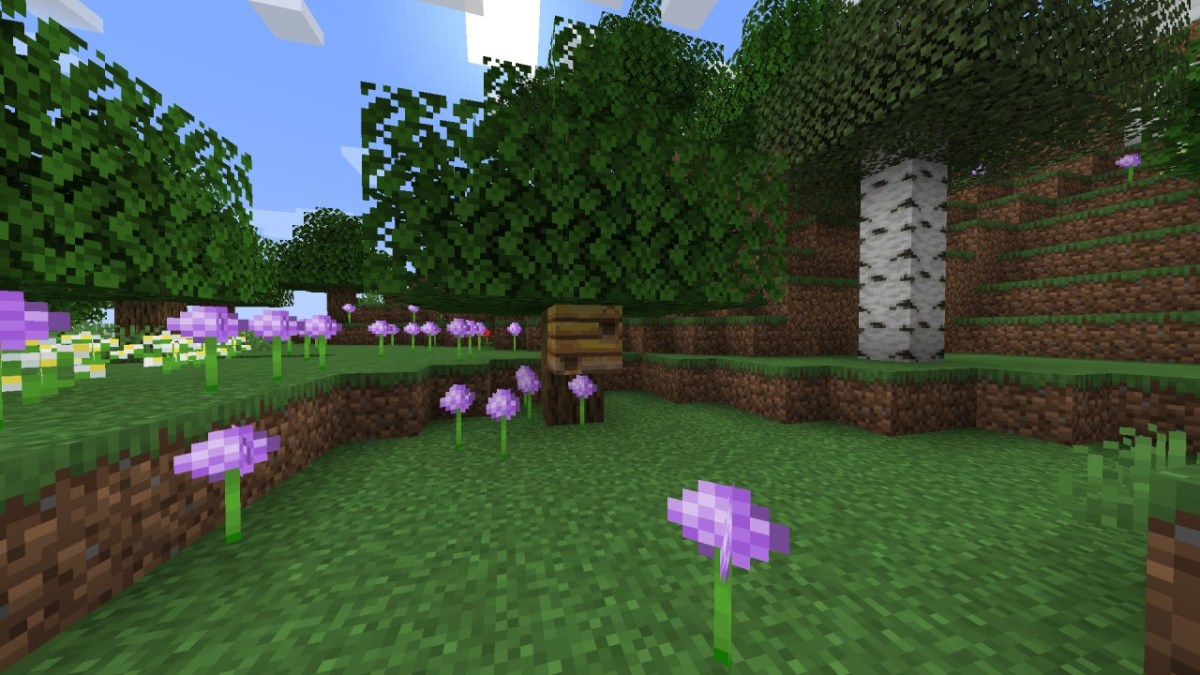
The Buzzy Bees update was a massive shift for the community when it first dropped. I remember the excitement of finally having a way to liven up my farms with something more than just cows and sheep. But as the game has evolved through the latest patches, honeycombs have turned into an essential industrial resource. Whether you are trying to lock in the perfect look for a build using copper or you want to build a high speed emerald empire, you have to know how the math behind these bees actually works.
I have spent dozens of hours testing the limits of these mechanics to find the most efficient ways to harvest and use this resource. In my experience, most players just scratch the surface of what bees can do. This guide is going to walk you through everything I have learned about getting honeycomb safely and utilizing it for maximum gain in your 1.21 world.
How to Harvest Honeycomb Without Getting Stung
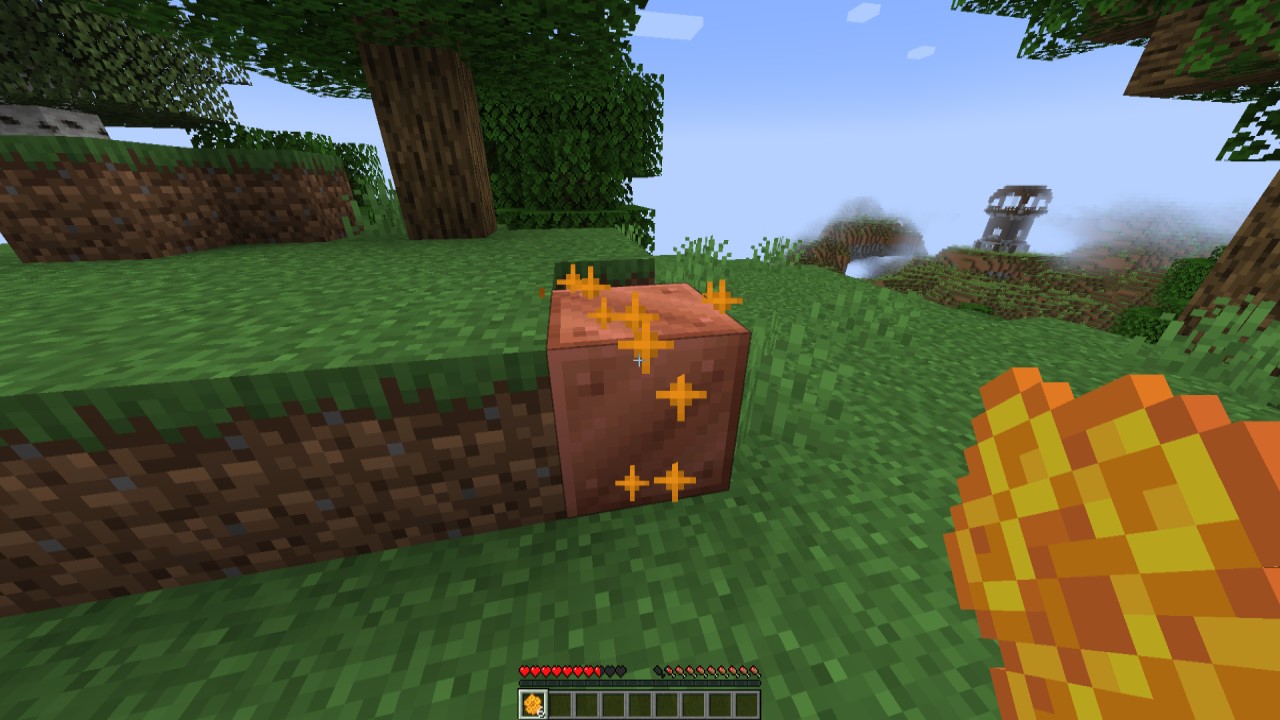
It might seem simple to get honeycombs in Minecraft since all you have to do is break a beehive, right? Well, that is a mistake I only made once. Breaking the hive just gets you a swarm of angry bees and a very short trip back to your spawn point. To get the actual item, you need a pair of shears and a bit of patience.
My favorite way to do this safely is using the campfire trick. Here is the exact process I use to keep the bees calm:
- Wait until you see honey dripping from the hive or nest. This only happens when it reaches Honey Level 5.
- Place a lit campfire exactly one block underneath the hive. The smoke acts as a sedative for the bees you attract.
- I recommend placing a carpet or a trapdoor on top of the campfire. This lets the smoke pass through but prevents you (or your bees) from accidentally stepping in the fire and taking damage.
- Use your shears on the level 5 hive. You will get exactly 3 honeycombs every time.
The Technical Math of Honey Production
Most guides tell you to just wait for honey, but I wanted to know exactly how long that takes. In my technical testing, I found that the whole process is governed by a very specific tick-based cycle.
- A bee must stay inside the hive for 2400 game ticks to process nectar. That is exactly 2 minutes in real time.
- Each time a bee leaves the hive after this processing period, the honey level increases by 1.
- There is a hidden 1 percent chance that a bee will be extra productive and increase the honey level by 2 instead of 1.
- Bees only work during the day and in clear weather. They will head back inside if it starts raining or if the sun goes down.
If you want the absolute best rates, I have found that building your farm in the Nether or the End is the way to go. Since those dimensions do not have a day or night cycle, your bees can work 24/7 without ever needing to sleep.
Advanced Automation and Redstone Deniability
If you are like me and prefer a set-and-forget style of gameplay, you should look into automating your collection. You can actually use redstone to harvest honeycombs without ever needing a campfire.
The secret is a mechanic I like to call Redstone Deniability. If a dispenser with shears in it is triggered by a redstone pulse, the game does not attribute that action to a player. Because the bees do not have a specific person to blame, they stay perfectly neutral.
- Place a dispenser facing directly into your beehive or nest.
- Fill the dispenser with shears. Each use will take 1 point of durability.
- Use a redstone comparator on the back of the hive. A full hive at level 5 will output a signal strength of 5.
- Wire that signal to trigger the dispenser only when it hits that max level.
I noticed that in Bedrock Edition, the honeycombs can sometimes fly out at weird angles. To fix this, I always encase my dispensers in glass blocks and use a hopper minecart underneath to catch any wayward drops.
Turning Honeycombs Into an Emerald Empire
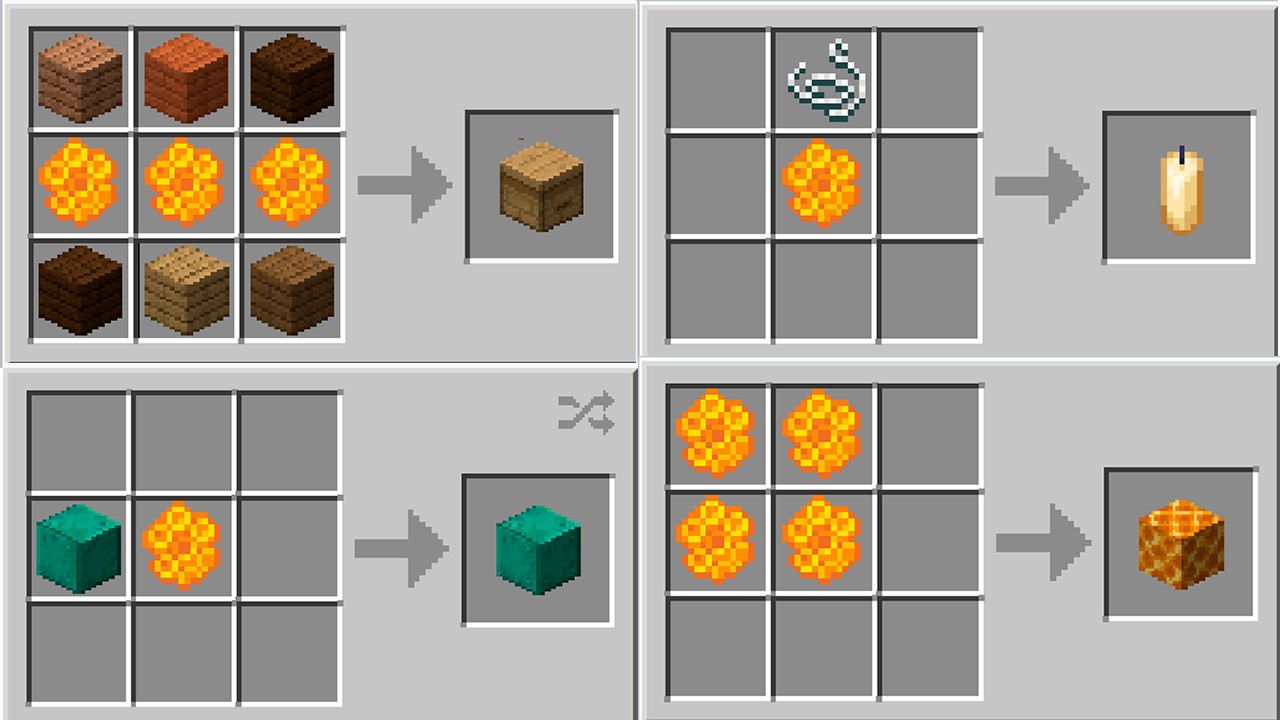
While many players use honeycombs for crafting candles or beehives, I found that the real value lies in villager trading. In the 1.21 economy, honeycombs are one of the most stable renewable resources you can farm.
- The Shepherd villager is your best friend here. At the Novice level, they have a chance to buy 12 honeycombs for 1 emerald.
- Unlike crops that need to be replanted or sticks that require massive tree farms, a 1×1 beehive setup can produce these emeralds passively while you work on other projects.
- If you take the time to cure a zombie villager, you can get this trade down to a single honeycomb for a single emerald.
I found this to be way more efficient than traditional trading when I was reviewing the features and comparing them to vanilla mechanics.
The Copper Revolution and Oxidation Control
The 1.21 Tricky Trials update changed the game for builders by introducing the Copper Bulb and new copper variants. Honeycomb is now the primary tool for maintaining the look of your base.
- You can use honeycomb on any copper block, including the new grates and bulbs, to wax them.
- Waxing a block locks its current oxidation state. This is vital for the Copper Bulb, as its light level actually drops as it turns green.
- A clean orange bulb puts out a light level of 15, but a fully oxidized one only puts out a level of 4.
I use this to create custom lighting and redstone UIs that do not dim over time. If you ever change your mind about the color, you can just scrape the wax off with an axe.
Deep Lore and the F-Sharp Planetary Resonance
One of the coolest things I discovered during my research is the unique sound honeycombs make. When you place a honeycomb block under a note block, it produces a flute sound.
But there is a bit of secret lore here that most people miss. Every note block in the game starts on an F-sharp pitch by default. When the developers were asked why, they explained that it was a reference to the theory that Earth itself has a natural planetary vibration tuned to F-sharp. By using note blocks, you are technically boosting the vibration of the Minecraft world. I love little details like this, much like learning about and their hidden backstories.
Spatial Data and Bee Navigation Traps
To keep your farm running forever, you have to understand the spatial limits of the bee AI. In my experience, ignoring these tiny details is why most farms eventually fail.
- Bees have a 22 block wander radius. If they get further than that from their home hive, their pathfinding can break and they might wander off into the distance.
- There is a very specific navigation bug with scaffolding. Bees can fly upward through it, but their AI does not know how to fly downward through it.
- If you build a multi-story farm using scaffolding floors, your bees will eventually get trapped at the very top of the building and stop working.
I always make sure to keep a clear flight path for my bees, usually by planting flowers directly in front of the hive entrance.







Published: Apr 20, 2026 11:52 am