


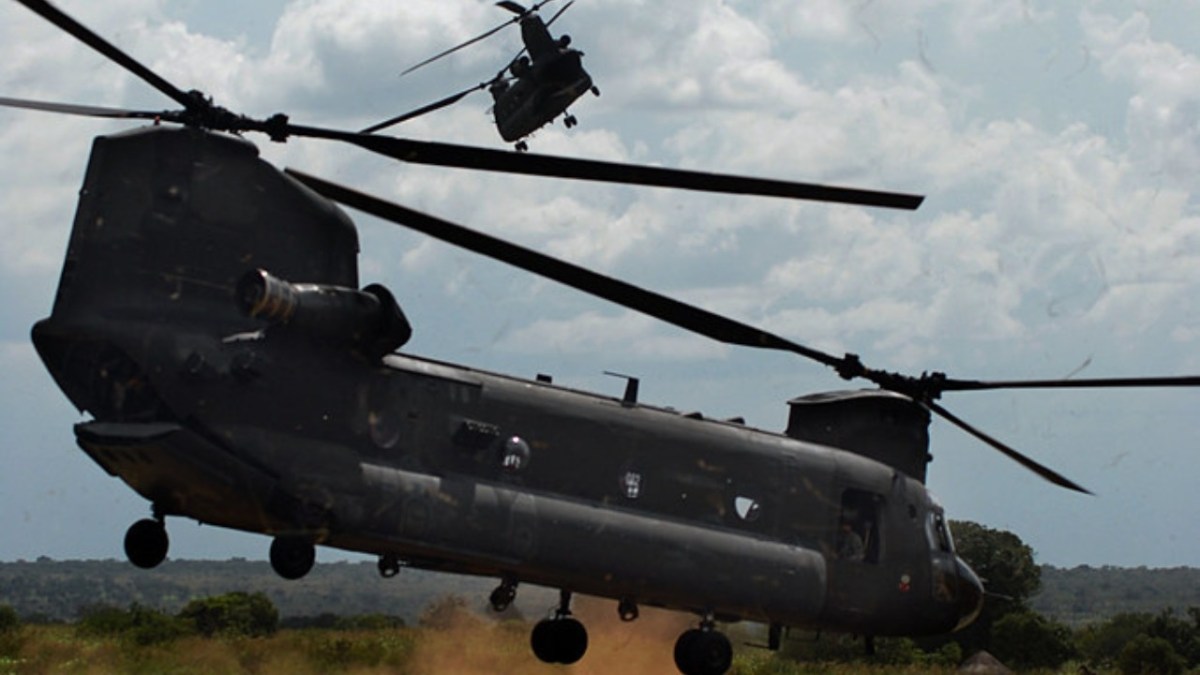

U.S. Army Maj. Stephen Ramsbottom has publicly disputed how the Trump administration described the protection at a Kuwait site where six American service members were killed by Iranian drones. The major, who serves as deputy chief of operations for the 103rd and has experience from the Iran War, shared his account in an interview with 60 Minutes correspondent Norah O’Donnell.
The six deaths took place during the first weekend of Operation Epic Fury. Iran responded with drone strikes aimed at the Army command post known as Port Shuaiba in Kuwait. Reports from media outlets described the location where the service members were based as a triple-wide trailer that contained office space inside.
Mediaite points out that Secretary of Defense Pete Hegseth and other administration officials have maintained that the post was fortified. Ramsbottom offered a different description of the setup when he spoke with O’Donnell.
Major outlines prior warnings and response from commanders
Ramsbottom told O’Donnell that the installation at Port Shuaiba lacked features meant to guard against attacks from the air. “It was, some people have phrased it as a trailer park,” he said. “The protection that was there was to stop car bombs and threats like that. There was nothing there designed to protect from an aerial attack.”
He said the risk of an Iranian drone strike was already recognized at the site. The concern had been brought to the attention of the unit commander, Brig. Gen. Clint Barnes. Ramsbottom also said he raised the issue himself with Maj. Gen. John Hinson, who handled logistics for U.S. Central Command.
“I brought it up in twice in various meetings,” Ramsbottom said, “basically saying, ‘Hey, I don’t see how we’re protected here.’” When O’Donnell asked how leadership answered, Ramsbottom replied, “He said we don’t have to worry about protection.”
Ramsbottom explained that he decided to speak out because he viewed the outcome as “a tactical failure by the Army, our leadership, and myself, all the way down to my level.” He added, “We just…we did not plan this well. And this needs to be a lesson that we learn.”
He stated that he had observed Port Shuaiba marked on an Iranian list of targets compiled by U.S. intelligence. Five other soldiers also told 60 Minutes that they had seen the same reports. “I saw those reports, there was definitely an X where we were,” Ramsbottom said.
A week before the strikes, the unit requested additional support. According to Ramsbottom, the command sergeant major responded, “Hey, we’re gonna try to get this this counter drone system sent out to you.” O’Donnell asked whether the system was delivered. “No, it never arrived at Shuaiba,” Ramsbottom said. “And we don’t know if it was ever even ordered to or requested.”
Ramsbottom submitted a whistleblower complaint to Congress that called for an investigation into the absence of “dedicated protection against one-way attack drones” at Port Shuaiba. He also reported that the site had no physician, no fixed aid station, and only one ambulance.
Democrats have listed the administration’s handling of the Iran War among the subjects they plan to examine after taking majority control of the House and Senate in January. Top military leaders had also warned Hegseth about the operation’s length before the strikes.
Sen. Richard Blumenthal, ranking member of the Senate Permanent Subcommittee on Investigations, reviewed the complaint and wrote to Hegseth on Sunday.
In the letter, Blumenthal requested a classified briefing covering “all force protection assessments” for the site, stating that the families of the six fallen service members, the wounded survivors, and the American people deserve transparency and accountability.

Published: Nov 16, 2026 09:45 am