



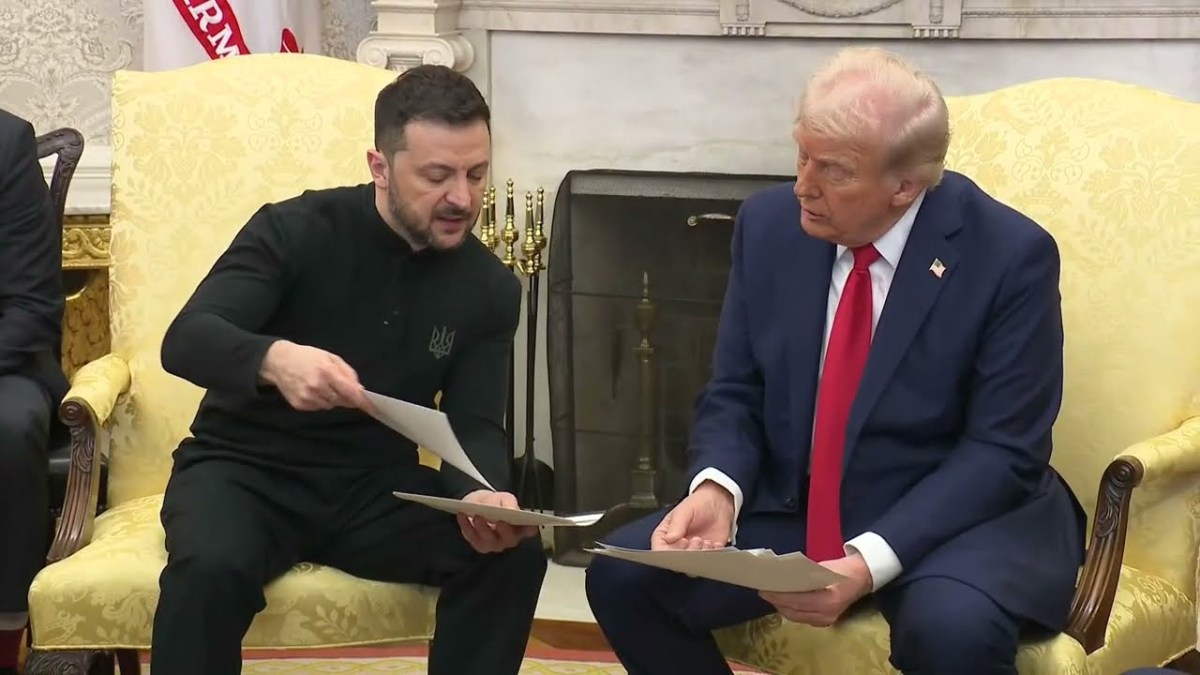

President Donald Trump told reporters on Monday that Ukraine and Russia had both agreed to halt attacks on each other’s energy infrastructure. He described the conflict, which began when Russia launched its full-scale invasion in February 2022, as a “disaster” and said the two leaders needed to meet and finish it.
Trump explained the supposed agreement by pointing to his own words. “Well, they agreed,” he said of Zelenskyy and Putin, according to Al Jazeera. “Because I said, ‘You agree’. That’s why they agreed, because I said they agree.” He later added that he would need to check reports of continued Russian strikes because “there’s been violations on both sides.”
He also claimed, without providing evidence, that at least 32,000 people had died in the fighting this month alone. “All I know is that Zelenskyy and Putin have to get together and end that ridiculous war,” Trump stated.
Reactions follow Trump’s Sunday claim of an energy pause
The Sunday announcement of an energy ceasefire caught Ukrainian and European officials off guard. It arrived two days after the United States temporarily loosened sanctions on Russian diesel, a decision that drew sharp criticism from Kyiv and several European governments.
Zelenskyy said the diesel change reversed long-running Western efforts to limit Russia’s economic power and would only strengthen Putin’s position. Members of both major parties in Congress said the move appeared to conflict with existing U.S. law. A number of Republicans added that it undercut legislation Trump had previously signed to tighten restrictions on Moscow.
On Monday, Zelenskyy said Ukraine supported an energy ceasefire and had conducted no strikes on Russian refineries the previous night. He noted that Kyiv was prepared to sign “guarantees to make sure they can be trusted.”
He also wrote that Russian forces had attacked six Ukrainian energy sites that day, wounding 33 people across the country, and called the outcome the result of Russia seeing “the prospect of higher revenues for its war machine.” Reports of strikes continued after the claim, including Zelenskyy saying a Kharkiv power plant was hit that evening.
Russian Foreign Minister Sergey Lavrov dismissed any pause. He said Moscow would continue its military campaign, which it labels a “special military operation.” Lavrov stated of Zelenskyy, “I do not think he deserves a respite,” and added, “I don’t think we’ll be buying into assurances and promises again.”
Trump has repeatedly described Ukraine as the larger obstacle to a settlement and has said Putin appears more ready for a deal. He has also called on Ukrainians to remove Zelenskyy from office.
Al Jazeera’s Alan Fisher, reporting from Washington, noted that Trump has previously described agreements between the two sides that did not materialize. Fisher said Trump appears focused on lowering diesel prices to help U.S. farmers and ranchers, yet “it seems that he thinks there’s a deal, but no one else is sure that there actually is one.”
European governments expressed doubt about the claimed energy pause and approved the largest package of European Union sanctions since the 2022 invasion, adding 1,569 people and entities to the list.
German Chancellor Friedrich Merz said in Berlin, “Russia will only negotiate seriously under pressure, which is why we are sticking to our sanctions against Russia.” Polls ahead of the November 3 U.S. midterms show most voters frustrated with rising fuel costs, and an October 1 Associated Press–University of Chicago survey found that 65 percent of adults blamed the White House for the high cost of living.

Published: Oct 13, 2026 10:45 am