


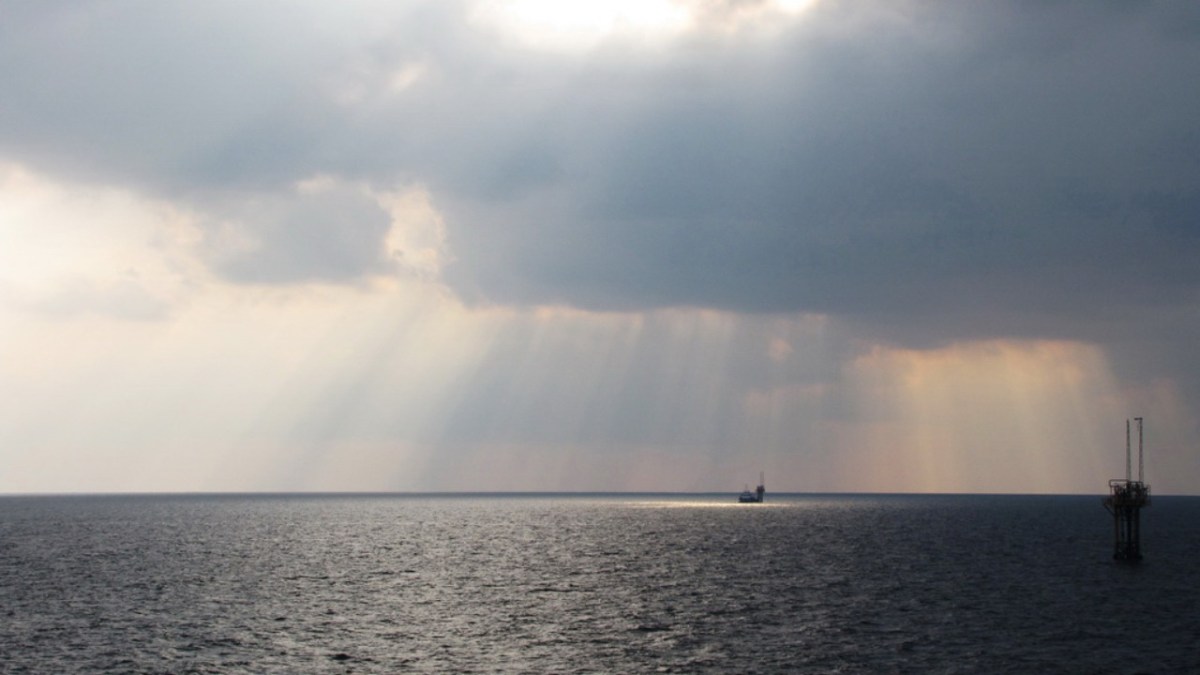

Lewis Pugh, a British endurance swimmer and United Nations Patron of the Oceans, finished a roughly 15-kilometer swim through sections of the Strait of Hormuz this week. The 56-year-old completed the effort in parts over three days, beginning at the Musandam peninsula and ending after rounding the Cape of Hormuz. He is believed to be the first person to attempt a long-distance swim in the area since the war started.
He entered the water on Monday in only swimming trunks, goggles, and a cap showing the U.N. logo. Shortly afterward, he heard two loud explosions. Speaking to The Associated Press after he returned to London, Pugh said an oil tanker about four kilometers away had been hit. “The explosion was so loud, two booms, and then fighter jets coming in,” he recalled. “And at that moment I realized we have to get out of here right now.”
The swim continued with interruptions. On the second day, as he headed back to the harbor, he passed a gas carrier that had been attacked. “I’ll never ever forget going past that gas carrier, the smell of the chemicals and then the flames, they were literally like fireballs going up into the sky. Around the ship, the water was on fire,” Pugh said. He described the scene as one that made the harm to the surrounding environment immediately clear.
Pollution from damaged ships raises concerns for local wildlife and coastlines
Pugh noted that many people view the strait mainly as a busy shipping corridor. “Most people, when they think about the Strait of Hormuz, they think of a shipping lane,” he said. “But it is also one of the most beautiful places I have ever been … it’s one of the treasure troves of the natural world.”
With vessels being sunk, he added, the area faces a severe threat and recovery could take years or even decades. In recent weeks, Iran has stepped up attacks on ships it claimed were traveling unauthorized routes while trying to tighten its hold on the waterway, including retaliatory attacks on ships near Hormuz after several tankers were sunk.
Before fighting began on Feb. 28, about one-fifth of the world’s traded oil moved through the strait. Tankers have also hit sea mines; one that carried more than 2 million barrels of oil exploded and caught fire last month.
Oil and chemical pollution from the damaged ships could affect dolphins, mangrove forests, coral reefs, and coastal areas for a long time, Pugh said. “When oil gets in there, when chemical pollution gets in there, it becomes very, very difficult to clean up that type of mess,” he explained. “It lasts for generations.”
During the trip, he saw large groups of dolphins near his support boat, along with turtles and ospreys. He also remembered seeing hundreds of turtles along the Omani coast before the war began.
Swimming in an active conflict zone brought risks different from those Pugh has faced before. He has previously handled extreme cold and encounters with great white sharks while swimming in Antarctica, at the North Pole, in the Red Sea, and across the English Channel.
He was the first athlete to swim across the North Pole and to complete a long-distance swim in every ocean. In 2023, he covered all 315 miles of the Hudson River. His foundation says earlier efforts helped lead to agreements protecting more than 3.5 million square kilometers of ocean.
Pugh summed up his aim in straightforward terms. “We’ve got to stop the war. We’ve got to open the strait, and we’ve got to clean up the pollution,” he said. He has long used such swims to draw attention to threats facing the oceans, describing the approach as a way to open discussion on environmental issues.








Published: Nov 22, 2026 12:45 pm