



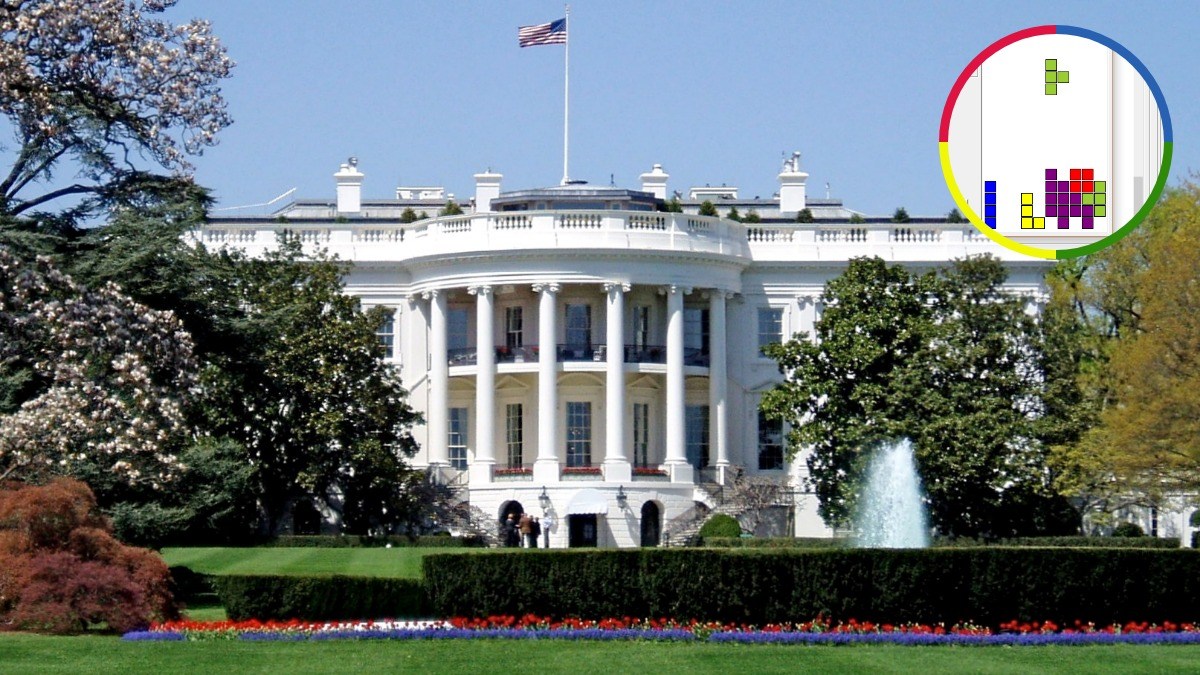

Tetris has spent more than four decades as one of gaming’s most recognizable puzzle franchises licensed across consoles, phones, and television. That legacy is now part of a dispute, as The Tetris Company has warned the White House over a browser game called Build the Wall. According to Variety, the company said it had no role in creating the game.
The White House unveiled its new digital arcade earlier this week, featuring five retro-style games built around policy themes. Build the Wall borrows Tetris mechanics directly, asking players to stack blocks into a border barrier that stops zombie-like figures under the subtitle Zombie Border Siege. That setup runs opposite the original, as classic Tetris ends the moment blocks pile up.
“We take copyright infringement very seriously,” Tetris said in a statement. No lawsuit or cease-and-desist letter has been filed, and Tetris said only that it is reviewing the matter. The company noted that Tetris has spent more than 40 years bringing people together through play, a legacy it says the game’s border theme works against.
The whole point of Tetris was avoiding a wall, not building one
Classic Tetris has always worked the opposite way, with the game ending the moment stacked blocks reach the top of the screen. Build the Wall inverts that logic, framing a wall of blocks as protection rather than defeat. The game shares the arcade with four other titles, each tied to a different piece of the administration’s agenda.
Rio Run plays like Snake and has players gather border crossers, while Supply Line borrows from Tapper to have players reject certain foods. Flappy Bill sends a bald eagle carrying legislation past obstacles, and Trump Savings Tycoon has players collect money for children’s savings accounts.
The White House promoted the arcade with animations parodying Xbox, PlayStation and Nintendo loading screens, and one clip morphed the Sega logo into MAGA. The pattern extends beyond gaming, as the administration also required a Trump-praising phone app on government devices.
United States copyright law does not protect the basic idea or method of playing a game, and the Copyright Office treats mechanics like falling blocks as unprotected. However, original expressive elements such as graphics and audiovisual presentation remain covered.
Tetris has a direct legal precedent, as a federal court ruled in 2012 that an iPhone game called Mino infringed its copyright. Xio Interactive, the game’s developer, argued it had only copied unprotected mechanics but the court disagreed. Judges found Xio had copied specific expressive choices, including the board’s dimensions and the look of the pieces.
Whether the White House game crosses that same line could depend on a side-by-side comparison of the graphics and block shapes. It’s important to note that intent alone will not settle the question. Courts typically weigh how closely the finished product mirrors the original’s specific visual choices.
Brand association adds another layer of risk. However, users could reasonably assume the company had endorsed the project, even though no partnership exists. The White House used a recognizable, easily identified format to deliver its message. The company has pursued unauthorized clones for decades, sending cease-and-desist letters since the late 1990s.
The episode also fits a longer pattern for this administration, which has clashed with the gaming industry before. Trump previously floated a meeting with video game industry members over concerns about violent content. How that history shapes the administration’s response to the company’s warning could become clearer soon.
For now, the administration faces a choice between adjusting Build the Wall’s visuals or risking a legal challenge, and its next move could set a precedent for how future administrations borrow from private game studios.






Published: Sep 7, 2026 01:30 pm