



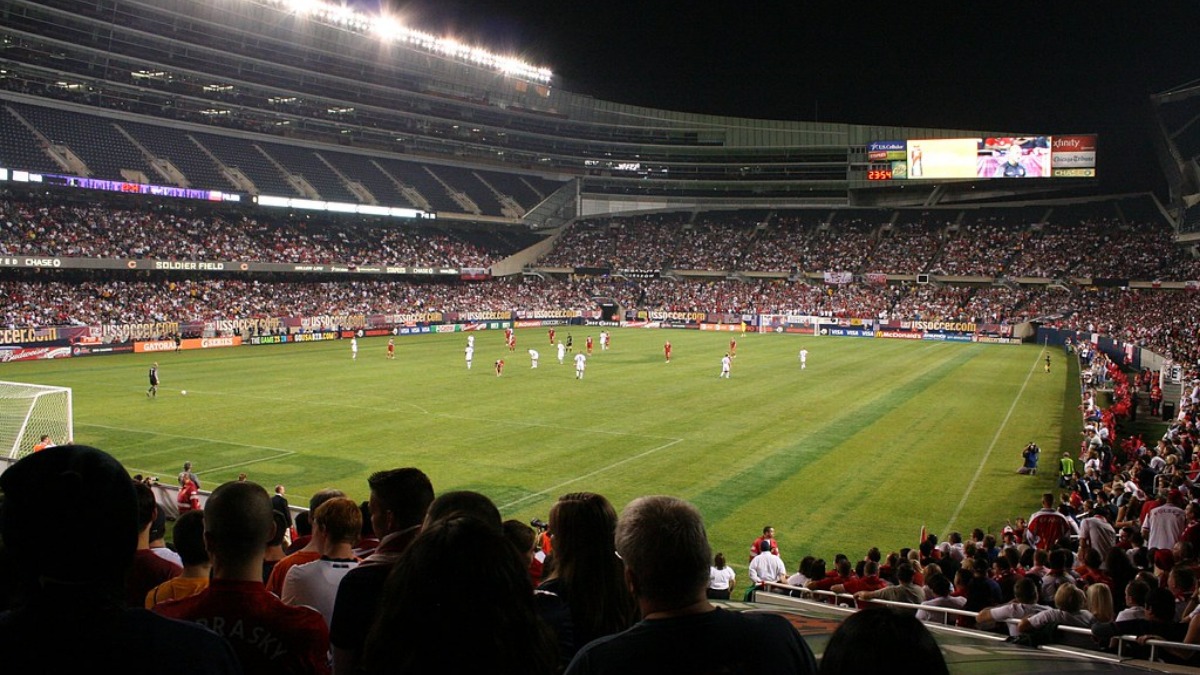

Rahm Emanuel, who served as the mayor of Chicago from 2011 to 2019, decided to turn down hosting duties for the 2026 World Cup because he would not let the city’s taxpayers carry the cost of FIFA’s demands. Chicago seemed like a logical choice for a host city, given that it is the third-largest city in the United States.
According to The Athletic, a large infrastructure requirement became the final problem in the talks. While the city looked like a strong fit on paper, the demands attached to the deal ended up outweighing the benefits Emanuel saw in hosting.
The specific demand that broke the deal involved a possible requirement to build a dome over Soldier Field. Emanuel said that while FIFA claimed they rarely used such requests, they would not remove the clause from the contract.
The financial split and the historic status of Soldier Field shaped the talks
Emanuel made it clear he was not going to put Chicago taxpayers at risk of a possible $50 million to $100 million expense based on a decision he would have no say in. Because Soldier Field is listed in the National Register of Historic Places, any major structural changes would have also needed special permissions, adding more difficulty to the proposal.
Beyond the dome, the financial setup of the deal proved to be a dealbreaker. FIFA’s model lets the organization claim most of the revenue from ticketing, broadcasting, and concessions, while local cities are left to cover the costs of security, medical services, transportation, and fire protection.
Emanuel argued that this setup was basically unfair to the city. He felt he was being asked to take on all the risk while FIFA took home the rewards. He explained that he was not willing to treat Chicago taxpayers as the dumb money at the table. Concerns about how FIFA handles ticketing have appeared elsewhere, including fans charged for free tickets due to a glitch.
Emanuel, who had a record of successfully bringing major events to Chicago, such as the NFL draft and the NBA All-Star Game, was not against sports. He actually trained in ballet as a teenager to improve his soccer skills. Still, he stayed firm on his economic principles.
He had previously refused to provide taxpayer subsidies for sports venues owned by billionaires in the city, and he was not going to change his stance for FIFA. Waiving amusement or sales taxes for the tournament would have been a non-starter after he had already taken such a hard line with local professional sports teams.
There were also concerns about FIFA’s restrictive sponsorship categories and the expectation that cities provide free transportation for ticket holders and host free fan festivals. Other cities have since struggled with these obligations, with some even passing transit costs on to fans. Logistics remain a worry too, with reports that delays could affect millions of fans under one safety rule.
Emanuel said he was not interested in the marketing value FIFA promised, especially since he knew the city could successfully host major events without their help. He believed Chicago had already shown it could draw and manage big events on its own terms.
When the time came to sign the contract, the city did so with a twist. They submitted a version that included an asterisk below the line, listing all of their pending concerns and conditions. FIFA, which did not accept redlining, ultimately moved on.
Looking back, Emanuel remains confident in his decision. With ticket prices for the opener reaching over $1,000 per seat, he pointed out the irony of asking regular residents to help pay for an event they likely could not afford to attend. He feels he did the right thing as a steward of the city’s future and taxpayer dollars.







Published: Jun 8, 2026 01:15 pm