



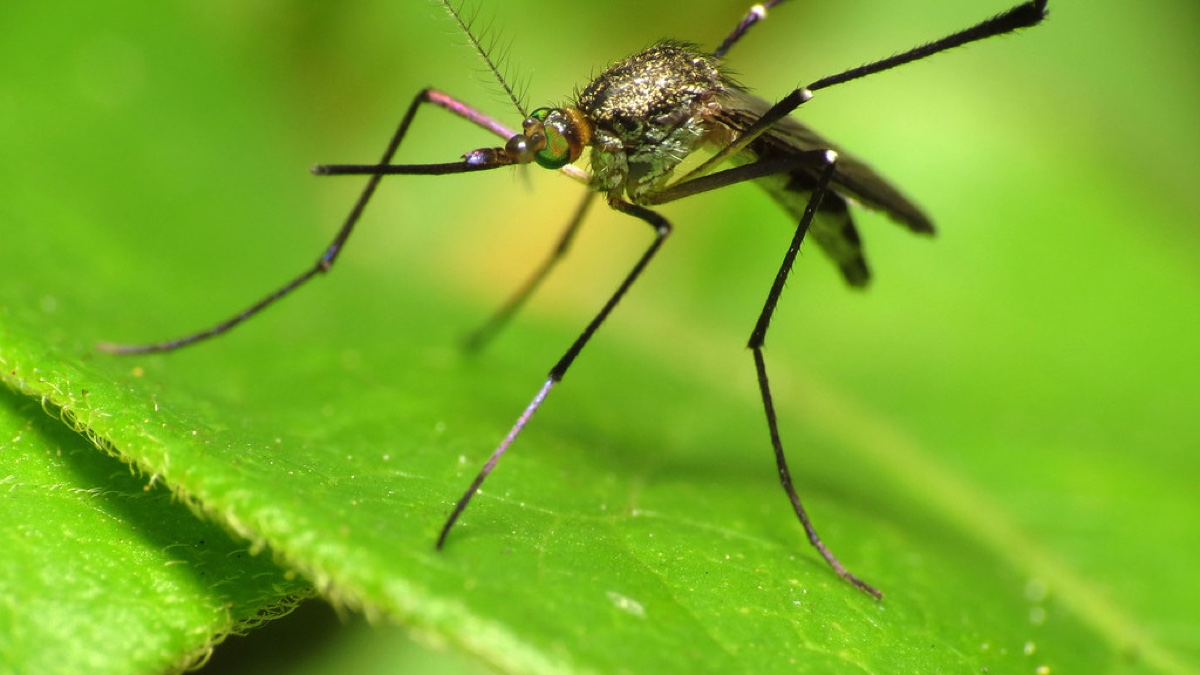

Google’s parent company, Alphabet, is moving forward with an ambitious proposal to release up to 32 million lab-bred male mosquitoes across California and Florida over the next two years. Operating under its life sciences subsidiary, Verily, the initiative is part of the long-running “Debug” biotechnology program aimed at reducing the populations of invasive, disease-carrying mosquitoes.
The proposed initiative relies on the Sterile Insect Technique, a decades-old pest control method widely used in agriculture and public health, according to the Debug Project website. Verily’s specific approach relies on a naturally occurring bacterium called Wolbachia rather than genetic modification (GMO). In public materials, the company frames the strategy around a “good bugs versus bad bugs” philosophy.
The proposal expands earlier localized pilot programs into much broader regional deployments. The multi-year plan is under active review at the U.S. Environmental Protection Agency (EPA). The agency is evaluating an experimental use permit application to determine the safety, ecological impact, and overall effectiveness of the strategy before issuing a final decision on field releases.
Once released, sterile males go looking for dates
Under the proposal, scientists breed male mosquitoes in controlled facilities and infect them with the naturally occurring Wolbachia bacterium. Because male mosquitoes feed on nectar rather than blood, they do not bite humans or spread disease. Once released, the males mate with wild females, but a Wolbachia-induced incompatibility prevents the eggs from hatching. Over successive generations, this process drives down the local mosquito population, shrinking the numbers of biting pests and lowering the risk of disease transmission.
While earlier Debug field trials in California’s Central Valley focused on Aedes aegypti mosquitoes to combat tropical threats like Zika and Dengue, this new 2026 expansion explicitly shifts its focus. The current proposal targets invasive Culex quinquefasciatus mosquitoes, which thrive near urban environments and serve as primary vectors for West Nile virus and St. Louis encephalitis. Both viruses remain persistent public health threats in California and Florida.
To support a deployment of this magnitude, the Debug project relies heavily on proprietary automation and advanced robotics software. Breeding and deploying millions of insects requires extreme precision to avoid accidentally releasing biting females.
Verily’s engineers utilize automated optical sorting systems powered by artificial intelligence to separate male and female mosquitoes at scale. These high-throughput technologies allow production facilities to efficiently package and ready the massive quantities of sterile males required for wide-area field releases.
As the project awaits official clearance, the EPA has opened the proposal to public comment, setting an official comment period that runs through June 5, 2026. After the comment period closes, the EPA will review public feedback alongside scientific data on the project’s safety and effectiveness. If granted unconditional approval, the project will mark one of the largest coordinated biological vector-control operations in United States history.
The public can learn more and comment by going to the Federal eRulemaking Portal at www.regulations.gov and entering the docket identification number EPA-HQ-OPP-2025-3951.









Published: Jun 1, 2026 03:45 pm