



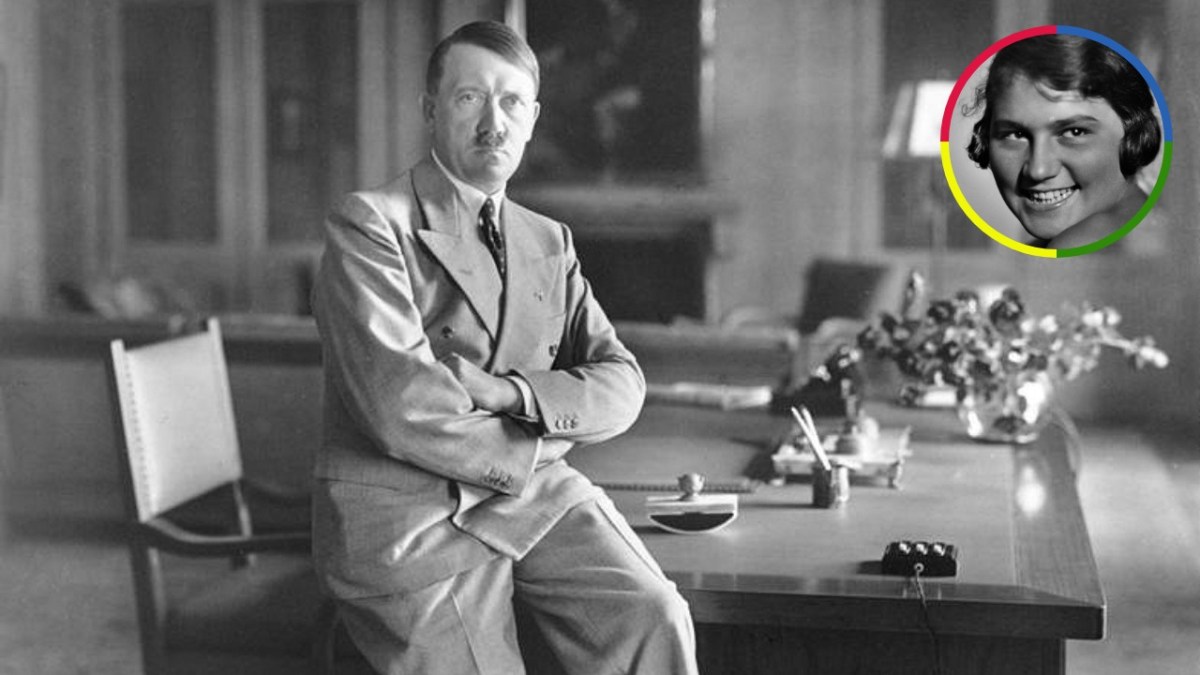

For 95 years, historians have relied on a specific timeline regarding the death of Geli Raubal, the 23-year-old half-niece of Hitler who died from a gunshot wound in their shared Munich apartment. The long-standing narrative has always provided Hitler with a convenient alibi. However, new findings from German researcher Harald Sandner suggest that this timeline might be fundamentally flawed, per New York Post.
The standard account has always been that Hitler and Raubal engaged in a heated argument on September 18, 1931. According to this version, Hitler then departed Munich for Nuremberg later that afternoon. The story goes that Raubal took her own life after he left, and Hitler’s servant Georg Winter discovered her body on the morning of September 19.
Sandner has now unearthed three previously overlooked records in the Munich archives that throw a wrench into that account. These documents include two death notices and an entry in the Munich II civil death register. All three records place the discovery of Raubal’s body on Friday, September 18, instead of the following day.
Three old records say she was found dead before Hitler ever left Munich
The civil registry is particularly precise, as it records the discovery at 10:15 a.m. If these records are accurate, Raubal was already dead before Hitler ever left Munich. Sandner’s reconstruction suggests that Hitler was at an NSDAP event in the city from approximately 10:30 a.m. to 12:30 p.m. on that same day.
This doesn’t prove he pulled the trigger, but it certainly removes the main chronological barrier that has allowed historians to exclude him from being present when she died. Sandner told the outlet the discrepancy may point to a police cover-up, as officers sympathetic to the Nazis served in the Munich force at the time.
The official suicide ruling rested on a police report filed 10 days after Raubal’s death. No autopsy was performed despite the gunshot wound, and prosecutors allowed her body to be released for burial in Vienna just days later. However, Sandner acknowledges the records do not prove anyone tampered with the file.
Historian Heike Görtemaker, who has studied Hitler’s inner circle extensively, isn’t convinced that this changes the history books. She argues that the September 18 date could simply be a transcription error. She also points out that the established timeline is backed by eight different witness accounts.
Accepting Sandner’s theory would mean all eight witnesses were mistaken or had conspired, which Görtemaker considers highly unlikely. She also notes that the Munich police chief at the time was one of Hitler’s opponents. That would have given authorities a strong political incentive to expose him rather than protect him, as Hitler was not yet in power.
Raubal and Hitler lived together at Prinzregentenplatz 16, and the relationship was reportedly fraught with control and possessiveness. Raubal had also reportedly expressed a desire to leave Munich to continue her singing studies in Vienna. The argument they had shortly before her death is a central part of the historical record.
Rumors of foul play surfaced almost immediately. Shortly after her death, the Social Democratic newspaper Münchner Post reported a serious argument between the two and raised questions about injuries on her body. Old evidence has reopened questions around other historical murder cases as well, including a 160-year-old mystery recently brought back into the spotlight by an unexpected discovery. Other newspapers suggested Hitler might have been involved in her death.
Sandner plans to publish a book on the historic cold case in November, which he says will show Hitler should be viewed as the chief suspect.








Published: Sep 25, 2026 10:00 am