



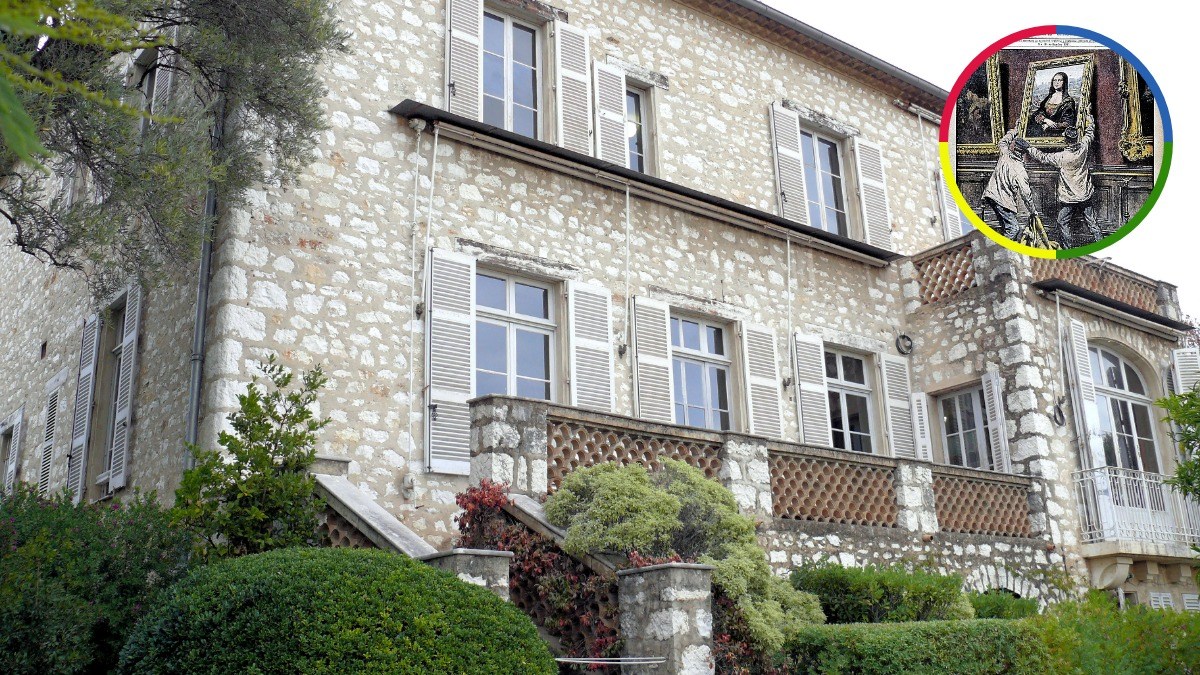

Les Collettes is the house where Pierre-Auguste Renoir spent his final years, and it still holds the furniture, the easel, and the wheelchair he used before his death in 1919. Two thieves broke into the museum built around it early on Tuesday. They took four Renoir paintings and escaped with two of them.
The alarm at the Musée Renoir in Cagnes-sur-Mer went off at 5:48 a.m. and police reached the site five minutes later, according to CNN. The pair were forced to abandon two canvases as they fled, and both turned up in the museum garden. The whole operation took less than five minutes.
Portrait de Madame Stephen Pichon and Coco lisant were the two recovered. Madame Colonna Romano and Jeune femme au puits are still missing, and the deputy mayor valued those two at €2 million and €200,000. However, Mayor Bryan Masson put the combined worth of all four at roughly €9 million, or $10.5 million.
Whoever did this knew exactly what they were doing
The pair cut through wire fencing to reach the grounds using an electric knife and a hacksaw, and they timed the break-in to coincide with a change of security shifts. All four works hung in the same room, the Chambre Gangnat. Masson described the thieves as well equipped and well prepared.
The Musée Renoir opened in 1960 in the artist’s former home on a hill above the town, and its permanent collection runs to 13 paintings alongside about 40 sculptures, pieces of furniture, and photographs. It’s important to note that the stolen works were not part of that collection, as they had been on deposit from the Musée d’Orsay since 1995.
Three of the four are classified as Musées Nationaux Récupération, a status created by a 1949 decree covering cultural property recovered after World War II whose owners were never identified. Jeune femme au puits, a small oil on wood painted around 1886, carries the murkiest history of the group.
Culture Ministry records indicate the painting may have been bought by the German “Otto” organization, which ran black market art purchases in occupied France, or seized there by Hermann Brandel, the SS officer who headed it. The work was recovered in 1949 and has now been stolen a second time.
Selling either missing canvas would be close to impossible, as a Renoir cannot pass through a legitimate auction house or dealer without being recognized. Gold can be melted down and the proceeds of a $240 million Bitcoin theft can be spent, though a famous painting has nowhere to go. James Ratcliffe of the Art Loss Register said all four works were entered on its stolen art database the day of the theft.
France has been working through a run of museum thefts, including the loss of €88 million in Napoleonic crown jewels from the Louvre last October. Culture Minister Catherine Pégard responded in July with a 33-point security plan and a €30 million fund. However, a parliamentary report found that only 54 percent of surveyed museums had a video surveillance system.
Europol has warned that the profile of the people carrying out these thefts is shifting, as specialist art crime networks give way to loose groups recruited through social media and messaging apps. Those groups operate on a crime-as-a-service model, which makes them considerably harder to trace.
The Musée Renoir is closed until further notice, and the Marseille prosecutor has opened an investigation into theft by an organized gang.









Published: Sep 9, 2026 03:15 pm