




I have been a fan of these games for a long time, and I remember back when Fighting types were just about hitting things as hard as you could. But as the games have evolved, I have realized that mastering this type is more like a science. If you want to rank higher and actually win those tough matches, you need more than just a list of names. You need to know the math, the lore, and even the hidden map data that governs how these creatures move. Here is my personal breakdown of everything I have learned about the Fighting type.
Understanding Fighting Type Weaknesses and Why They Matter
When I am building a team, I always start with the basic counters. Fighting types have three major enemies that have stayed fairly consistent through the years. If you want to take them down, you have to lean into these specific types.
- Psychic types are my personal favorite counter. The common saying is brains over brawn, and it is true here. A martial artist relies on a focused, disciplined mind, and Psychic energy disrupts that structure perfectly.
- Flying types have always been a nightmare for Fighting types. From my experience, being in the air gives you a natural advantage over an opponent who needs to stay grounded to deliver a punch. This is why moves like Brave Bird are so devastating.
- Fairy types were the big game changer that I saw arrive in Generation 6. They represent a kind of magical determination that can power right through a physical assault. Even the toughest Machamp can struggle when a Clefairy starts smiling at it.
If you are looking for the best fighting type pokemon to add to your own roster, it is vital to remember that dual typing can change everything. For example, a Pokémon that is both Fighting and Steel will not be weak to Flying moves because its metal body resists them.
The Hidden Math Behind Your Damage Rolls
I want to take a moment to talk about the math that goes on under the hood because most players completely ignore it. In the mainline console games, your damage is not just a static number. I use this formula to predict how my hits will land:
Damage = ((((2 x L/5 + 2) x P x A/D)/50) + 2) x M
In this model, L is your level, P is the move power, A is your attack, and D is the defender’s defense. The part that always keeps me on my toes is the random factor found in the M variable. Every time you attack, the game picks a random number between 217 and 255 and divides it by 255. This means your move could deal anywhere from 85% to 100% of its total potential damage. I have lost matches because I got a low roll, so I always calculate for the worst case scenario.
Why Breakpoints are the Key to Winning in Pokémon GO
If you spend as much time as I do roaming the streets with the best Pokémon in Pokémon GO, you know the damage works a little differently there. It uses something called a floor function:
Damage = [1/2 x Power x Attack/Defense x STAB x Effectiveness] + 1
The floor function means the game always rounds your damage down to the nearest whole number. This creates breakpoints. I have seen situations where I powered up my Machamp five times and it did zero extra damage until that sixth power up finally triggered the next whole number. Because fast moves like Counter hit so often, hitting that next breakpoint can increase your total damage by a massive margin. It is one of the most important things I check before I spend my hard earned Stardust.
How to Master the Current Competitive Meta in Regulation H
I have been watching the recent world championships and the current Regulation H meta is wild. If you are playing competitively, you need to know these usage stats so you do not get caught off guard.
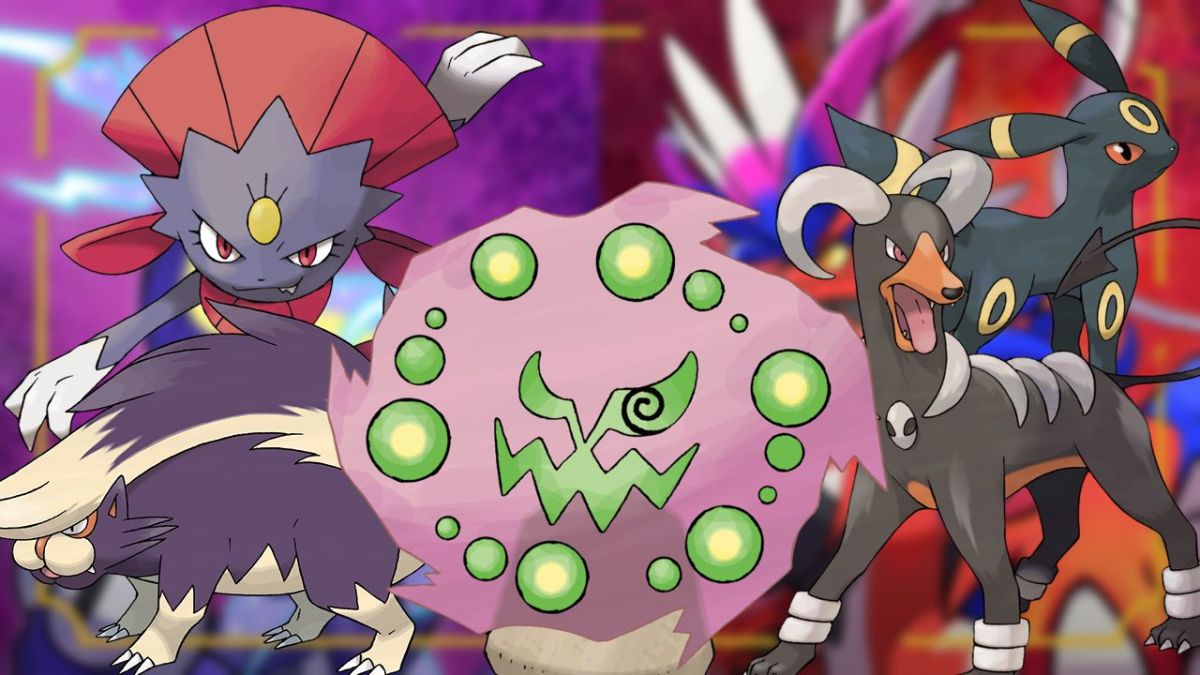
- Incineroar is everywhere, appearing in over 54% of top teams. While it is a Fire and Dark type, I usually see it run Close Combat to surprise opponents. It also uses Intimidate to cut your attack power the moment it enters the field.
- Annihilape has about a 26% usage rate, and it is a monster in the current format. Its signature move, Rage Fist, gets 50 points stronger every time it takes a hit. I tell my friends never to use a weak, multi-hit move against Annihilape because you are just handing your opponent a win.
- Sneasler is a fast threat that uses its Unburden ability to double its speed once its item is consumed. I often see it paired with a Focus Sash to guarantee it survives at least one hit.
Exploring the Paradox Pokémon Power Creep in Generation 9
When Generation 9 launched, I was shocked by the introduction of Paradox Pokémon. These are ancient or future versions of Pokémon we already know, and they have completely changed the power balance.
- Iron Hands is a future version of Hariyama that is exclusive to Pokémon Violet. It is a Fighting and Electric type with incredible bulk. I recommend using an Assault Vest to boost its Special Defense even further, making it a nightmare to knock out.
- Great Tusk is the ancient version of Donphan and a personal favorite of mine in Pokémon Scarlet. It has a competitive speed of 87 and a massive 131 Defense stat, which makes it one of the best physical tanks in the game.
- Iron Valiant is a glass cannon that combines Fairy and Fighting. It has a mixed attack stat of 130 and 120, meaning it can hit you from the physical or special side with equal force.
The Secret Martial Arts History Behind Your Favorite Pokémon
I love the deep lore that the designers weave into these creatures. If you look closely, you will see that almost every Fighting type is a tribute to a real world martial art.
- Hitmonlee and Hitmonchan are the classic duo. Hitmonlee is modeled after Bruce Lee, focusing on long range kicks, while Hitmonchan is a tribute to Jackie Chan and the science of boxing.
- Sawk and Throh represent Karate and Judo. Sawk is based on Mas Oyama, the founder of Kyokushin Karate, and spends its time training against rocks and trees to perfect its karate chop.
- Hariyama is a direct nod to professional Sumo wrestling. Its name even combines the sumo maneuver harite, which means needle hand, with yama, meaning mountain.
- Infernape is inspired by the legendary Sun Wukong and practices Monkey Kung Fu, which uses all four limbs for unpredictable strikes.
Finding the Rarest Spawns Using Spatial Data and S2 Cells
If you are hunting for Fighting types in Pokémon GO, you need to understand the geospatial data Niantic uses. I have spent a lot of time looking at S2 cells, which are essentially a grid over the whole planet.
- Level 17 cells determine where Pokéstops are. Only one stop can exist in each cell, so I always check this before I submit a new location.
- Level 14 cells control Gym density. If you have 20 stops in one of these cells, you will get three Gyms.
- Level 20 cells are the smallest and determine the exact center of a spawn point.
I have also found that specific OpenStreetMap tags determine what spawns. Fighting types love city and urban biomes. Look for tags like landuse=commercial or areas with primary highways. I also highly recommend hunting during cloudy weather because your Fighting type attacks will be boosted and you will see more spawns with better stats.
The Economic Rarity of Evolution Items and TCG Cards
Finally, I want to touch on the rarity of certain items because I know how frustrating it can be to hunt for them. In Pokémon GO, the base drop rate for evolution items like the Razor Claw is only about 0.15%. However, I have found that your 7th day streak bonus is the best way to get them, as the probability jumps to over 50% for a guaranteed item drop.
If you are into the card game, the rarity is even more intense. In the Scarlet and Violet base set, I have seen that the Gold Hyper Rare Koraidon ex is one of the hardest cards to find. Out of thousands of packs opened, it only appeared about 0.23% of the time. Whether you are collecting cards or items, patience is definitely your best tool.
I hope this gives you a much better perspective on how to handle the Fighting type. Between the 85% damage roll variance and the level 14 S2 cell gym density, there is so much more to this game than just choosing the right move. I will be here if you need more tips on your journey to becoming a master.



Published: Apr 15, 2026 12:28 pm