




I have spent thousands of hours in Minecraft, and if there is one block that separates a beginners dirt shack from a professional mega-base, it is smooth stone. It has that clean, light-gray border that makes foundations look solid and modern builds look sleek. While the recipe seems simple on the surface, there is actually a lot of hidden math and technical depth that most players miss. In this guide, I am going to walk you through the most efficient ways to make smooth stone, how to use it for massive emerald profits, and even how to automate the whole process using the new 1.21 Crafter block. Once you have mastered these basics, you might even want to learn how to play split-screen in Minecraft so you can show off your new industrial-scale furnace arrays to your friends.
The easiest smooth stone recipe for survival
If you are just starting out, you probably have a lot of cobblestone in your inventory. To get to the smooth stuff, you have to go through a two-step smelting process. I always set up at least a few furnaces at once because doing this one block at a time takes forever.
- First, put your cobblestone into a furnace with some fuel to turn it into regular stone.
- Next, take that regular stone and put it right back into the furnace for a second round of smelting.
- Once that second bar finishes, you will finally have smooth stone.
I noticed early on that many people try to use a blast furnace to speed this up, but it will not work. Blast furnaces are strictly for ores and metals. For smooth stone, you are stuck with the standard furnace, which takes exactly 10 seconds, or 200 game ticks, per block. If you want to make concrete in Minecraft and optimize your industrial builds, you will find that smooth stone serves as the perfect aesthetic buffer block between high-contrast materials.
My favorite shortcut for skipping the first smelt
One of my favorite shortcuts is bypassing that first smelting step entirely. If you have a pickaxe with the Silk Touch enchantment, you can mine natural stone blocks, and they will drop as stone instead of breaking into cobblestone.
- Using Silk Touch effectively cuts your fuel costs and smelting time in half.
- Since you start with stone, you only need one smelt to reach the smooth stone stage.
- This is a lifesaver when you are trying to produce hundreds of stacks for a large castle or a modern skyscraper.
To keep track of your resource counts for these massive builds, you should master the Minecraft paper recipe so you can craft books and maps to stay organized.
Smelting math and the 11 percent fuel efficiency boost
I am a bit of a nerd when it comes to fuel efficiency because I hate running out of coal mid-build. Most people just toss in whatever they have, but if you look at the numbers, there is a clear winner for bulk production.
- A single piece of coal smelts 8 items.
- A block of coal, which costs 9 coal to craft, smelts 80 items.
- The efficiency gain is calculated as ((80 / (8 × 9)) – 1) × 100, which gives you exactly 11.11 percent more value just by using the block form.
Lava buckets are even better for massive projects since one bucket smelts 100 items. Just be careful not to use them for small batches, or you will waste all that extra heat. For tiny touch-ups, I usually just use sticks or wooden planks since they burn quickly and do not waste a whole piece of coal.
Using the secret furnace XP bank to repair mending gear
Something I discovered during my survival runs is that furnaces actually have a hidden memory. Every time you smelt a block of cobblestone into stone or stone into smooth stone, you earn 0.1 XP. It does not sound like much, but it adds up fast when you are processing thousands of blocks for a foundation.
- If you use a hopper to pull items out of your furnace into a chest, the XP stays locked inside the furnace block itself.
- I have let my super-smelter run through stacks of stone while I was away.
- When I come back and manually pull out just one item from the furnace UI, I get all the accumulated XP at once.
- This is one of the easiest ways to repair gear with the Mending enchantment without having to build a complex mob farm.
How I automate smooth stone slabs with the 1.21 Crafter
The 1.21 Tricky Trials update changed everything for me because of the Crafter block. We can finally automate the production of smooth stone slabs, which are great for floors since mobs cannot spawn on bottom-half slabs. To make a slab factory that never breaks, I use specific comparator logic.
- I set up my Crafter with a redstone comparator in subtraction mode.
- I place a full composter, which gives a signal strength of 8, into the side of the comparator.
- The Crafter outputs a signal strength of 1 for every slot that is filled or disabled. I disable 6 slots, leaving the bottom row open.
- When the Crafter has 1 block, it outputs signal 7. The subtraction is 7 – 8 = 0.
- When it has 3 blocks, it outputs signal 9. The subtraction is 9 – 8 = 1.
- That signal of 1 triggers a pulse that fires the Crafter only when the recipe is perfect.
Make sure your output hopper is placed directly in front of the Crafter’s face so the items do not just fly across the room. This setup is way better than a standard redstone clock because it never gets clogged if your stone supply runs low.
Cracking the stone mason trade for infinite emeralds
If you have a surplus of stone from a big mining trip, do not just throw it away. I always look for a Stone Mason villager, or a Mason in Java Edition, because they are a gold mine for emeralds.
- A Novice Mason will buy 20 regular stones for one emerald.
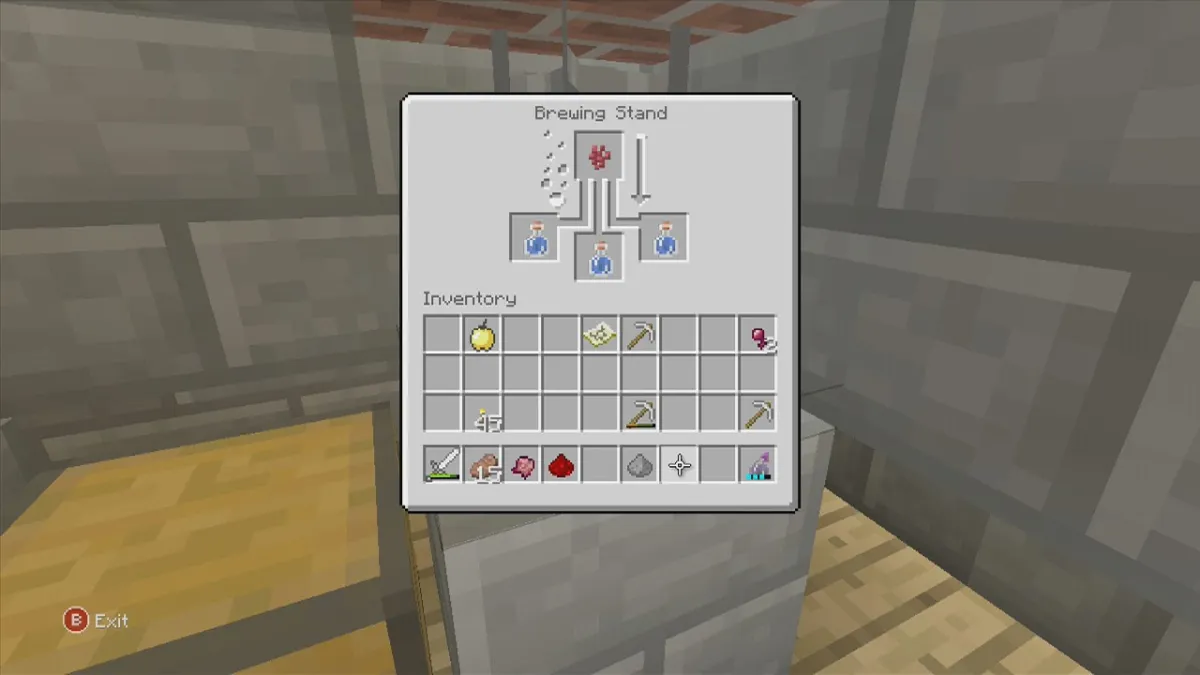
- I use a zombie to infect my Mason and then craft a potion of weakness and use a golden apple to cure them.
- On Hard difficulty, a single cure can bring the trade price down to 1 stone for 1 emerald.
- Since cobblestone is basically infinite, this trade loop can make you the richest player on your server in minutes.
As they level up to Expert, Masons unlock decorative trades. The math here is interesting because they pull 2 trades from a pool of 33, including all 16 colors of Terracotta and Glazed Terracotta. The game rolls for the category first, so if you are looking for a specific color to match your build, you have a 1 in 24 chance per Expert villager to get a perfect match. On average, it takes leveling up 1,296 Masons to complete a perfect hall of all 16 color-matched traders.
Why Efficiency V isn’t enough to instamine stone
I used to wonder why my Efficiency V pickaxe did not feel any faster when I was mining stone, and it turns out there is a specific mathematical reason. Stone has a hardness of 1.5 and a destruction threshold of 45 points.
- The damage formula is (ToolMultiplier + (EfficiencyLevel^2 + 1)) * (1 + (0.2 * HasteLevel)).
- For an Efficiency V Diamond pickaxe, the value is 8 + (5^{2} + 1) = 34.
- Because 34 is less than 45, the game adds a 6-tick delay (0.3 seconds) between every block you break.
- You absolutely must have a Haste II beacon to cross the 45-point threshold (34 x 1.4 = 47.6).
- Only with Haste II can you instamine, increasing your digging speed by 800 percent.
Nether logistics and why smooth stone is ghast-proof
In the hostile environment of the Nether, material choice is a matter of life and death. Smooth stone and smooth stone slabs have a blast resistance of 30.
- Ghast fireballs have an explosion power of 1.
- The minimum blast resistance to take zero damage from a fireball is 16.42.
- Since 30 is much higher than 16.42, your smooth stone bridges will never be destroyed by Ghasts.
- Using bottom-half slabs also prevents Piglins and Endermen from spawning on your pathways.
Deep lore and the transition from a technical glitch
I find it fascinating that stone is actually older than the name Minecraft itself. Back when Notch was first developing the game, it was called Cave Game, and later it was almost named Minecraft: Order of the Stone.
- The original stone texture was actually borrowed from one of Notch’s earlier projects called RubyDung.
- For years, smooth stone was a technical glitch block that only existed as metadata for a double-slab.
- It was not until the 1.14 Village and Pillage update that it became its own standalone block you could smelt.
- If you place a note block on top of smooth stone, it produces a bass drum sound, which I always use for industrial alarms in my redstone rooms.
Whether I am using it to build a massive castle foundation or setting up a villager trading hall to farm emeralds, this block is always at the center of my projects. Now that you have the 1.21 automation tricks down, your days of manual smelting are over. I hope this guide helps you build something incredible in your own world.







Published: Apr 22, 2026 03:17 pm