



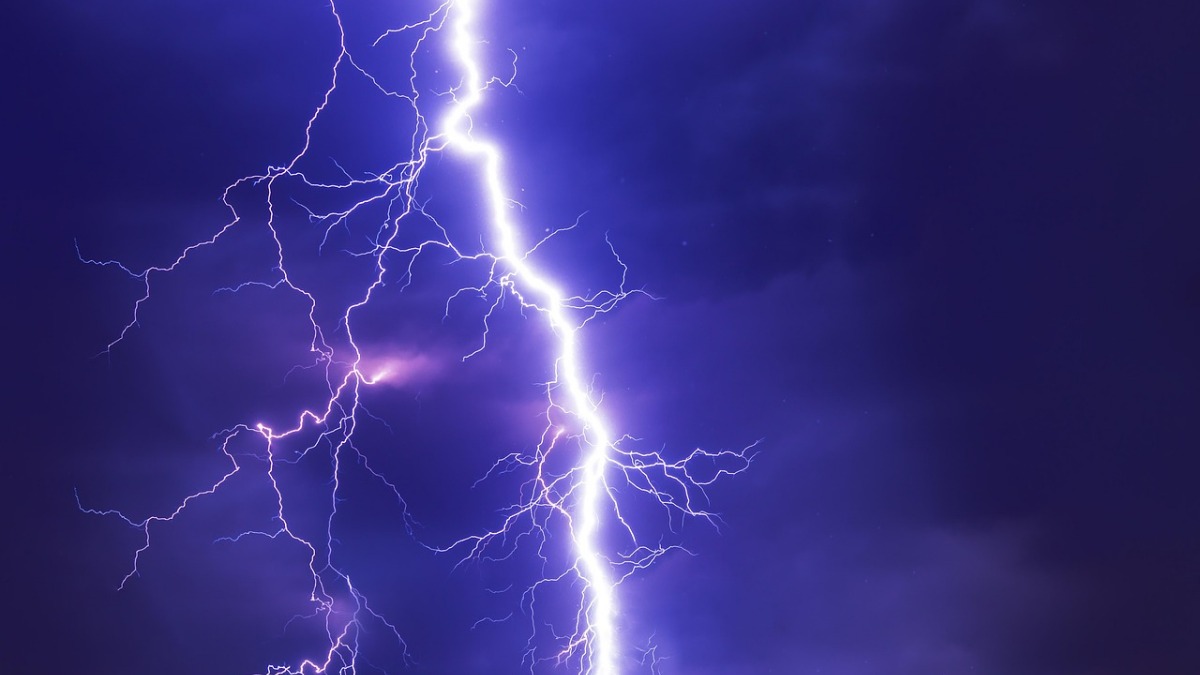

A 29-year-old tourist from the United States died Sunday evening after being struck by lightning while hiking on Mount Etna in Sicily. Italian firefighters said the man was in a restricted section of the volcano at the time, in an exposed area above the tree line. As detailed by The Guardian, a helicopter rescue team reached him shortly afterward, but he was declared dead by medical personnel at the scene. His identity has not been released by authorities.
Authorities have kept large sections of the volcano’s slopes closed to hikers for weeks amid a prolonged eruptive phase that has disrupted regional infrastructure. Officials noted that more people have died on Etna from lightning strikes in recent decades than from volcanic activity itself, even though the last eruption-linked deaths on the mountain date back to 1987. The exposed, high-altitude terrain carries its own weather hazards, separate from the volcanic activity many visitors expect to be the primary danger.
The current eruption has continued since around August 7, fed by vents at roughly 2,750 and 2,360 meters, with near-continuous explosive activity at the Voragine crater. As reported by Time Out, the activity has repeatedly closed Catania-Fontanarossa Airport, with ash plumes drifting as far as Malta and Libya.
The eruption has caused nearly as much chaos in the sky as on the ground
The aviation warning status for the region has shifted between red and orange as the eruption has ebbed and flowed. Airport operator SAC said arrivals and departures at Catania remained suspended for much of the past week, with some estimates putting the number of affected flights as high as 1,350. Major carriers including Ryanair, easyJet, ITA Airways and Wizz Air have had to reroute traffic to other airports such as Palermo and Comiso.
The disruption arrives amid an Australian tourist’s ordeal reported near Marsala in Sicily earlier this month, an incident unrelated to the volcanic activity. Airlines are required to provide rebooking or refunds for passengers affected by the closures, even though cash compensation typically does not apply to disruptions caused by natural events.
Etna sits roughly 3,300 meters above Catania and has erupted repeatedly over the past 500,000 years, drawing an estimated 1.5 million visitors annually. Italy’s Civil Protection agency has said that visitors ascending the mountain can encounter high-altitude conditions relatively quickly, even when the volcano itself is not actively erupting.
The tragedy also echoes warnings issued by national park officials elsewhere, amid a recent incident above Nevada Fall in California in which a bystander tried to help a swimmer near a closed section of trail. Officials in multiple countries have repeated that closures around volcanic and mountainous terrain are meant to guard against hazards beyond the obvious ones, including sudden weather changes at high altitude.
Local authorities in Sicily continue to monitor the volcano’s slope stability and the intensity of the eruption as flight disruptions persist at Catania-Fontanarossa Airport.









Published: Aug 17, 2026 11:30 am