



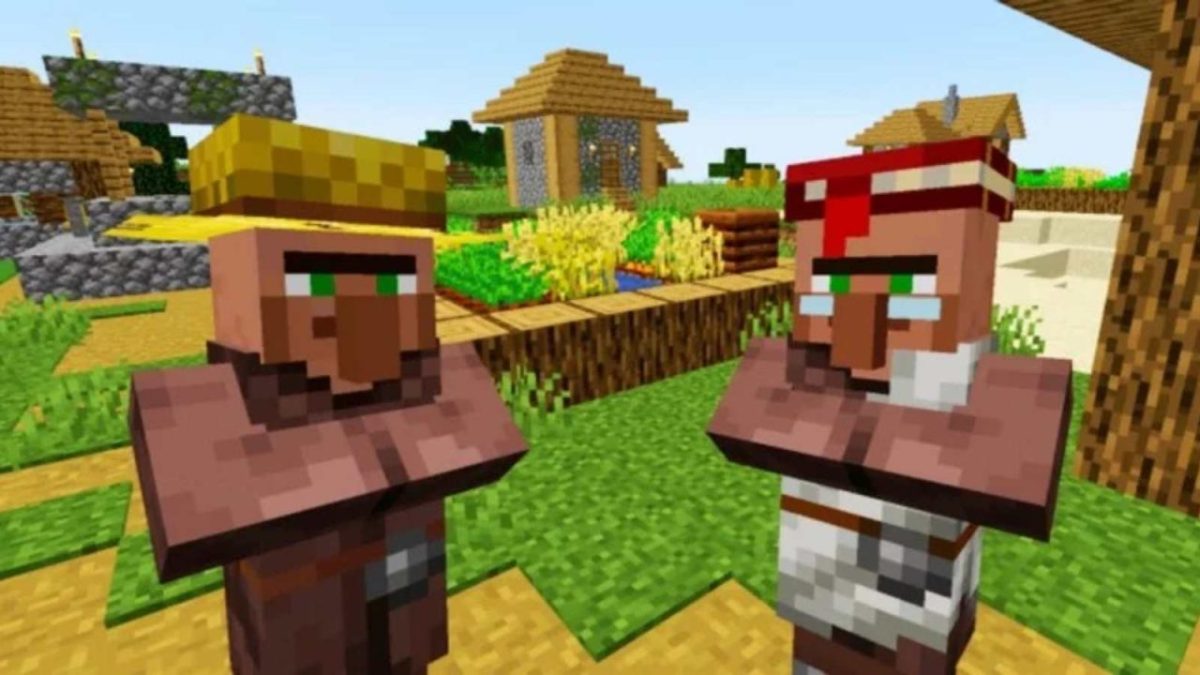
If you have ever felt like your villagers were just random noise machines that occasionally gave you a bad deal on bread, I have been there too. For the longest time, I just treated them like vending machines, but once I started digging into the actual code and the math behind their logic, my whole perspective changed.
The truth is that villager trading is the most powerful system in the game if you know how to manipulate it. Most guides just give you a flat list of items, but I want to show you the gears turning behind the scenes, from the way their AI chooses a path to the secret history of why they look the way they do.
To really dominate the economy, you have to understand that a villager is essentially a living NBT tag. Their whole life is a series of variables that you can control. I have spent hours testing how they claim workstations and why they suddenly stop restocking, and it usually comes down to spatial data that most players never even think about. Before that, make sure to get Mending villagers, if you want to build a lag-free trading hall.
How to assign professions and claim workstations
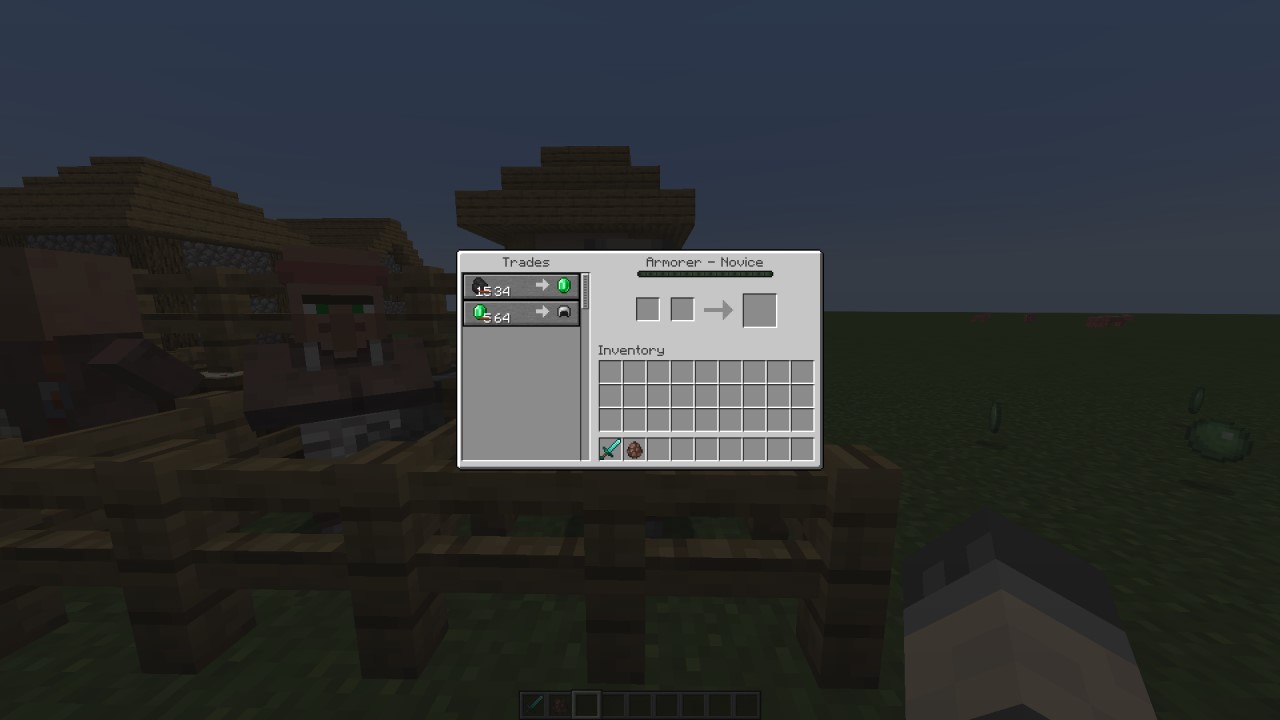
In my experience, the biggest headache for new players is getting a villager to actually take the job you want. It is not just about placing a block: it is about understanding their search radius. I have found that a villager’s AI is constantly scanning the area, but the range changes depending on which version of the game you are playing.
- In the Java Edition, an unemployed villager looks for a job site block in a 48-block sphere around them.
- If you are on Bedrock, they are much pickier: they only look 16 blocks horizontally and 4 blocks vertically.
- Once you trade with them even once, their profession is locked in forever, even if you break their workstation.
- Nitwits, the ones in the green coats, are essentially the outcasts of the village: they cannot take jobs and will never trade with you.
I always make sure to clear out any extra workstations nearby before I start, because otherwise, a villager might claim a block through a wall that they cannot actually reach. This is especially true when you are trying to find all Minecraft villager trades to fill out your collection.
The secret math of trade prices and supply and demand
One of the coolest things I discovered is that Minecraft actually has a dynamic economy. It is not just a flat fee. If you buy too much of one thing, the price goes up because the villager realizes you are desperate. This is calculated using a specific multiplier: usually 0.05 or 0.2, depending on how rare the item is.
The formula the game uses for the final cost looks like this:
C = P + max(1, floor(P * D * M)) + S
In this math, P is the base price, D is the demand, and M is that multiplier I mentioned. The S is the special price modifier, which is where things like curing a zombie villager come into play. I have found that the items with the 0.2 multiplier, like diamond gear or enchanted books, are way more sensitive to price hikes. If you want the best Minecraft enchantments without going broke, you have to let the “demand” value cool down by waiting a few in-game days between big shopping sprees .
Managing the Gossip system and your reputation
Villagers are actually social creatures. When they gather around the village bell to “socialize,” they are literally sharing data about you. This is called the Gossip system, and it is how the whole village decides whether to give you a discount or send an Iron Golem after you.
- Major Positive Gossip comes from curing a zombie villager and adds 20 points to your reputation that never decay.
- Minor Positive Gossip comes from normal trading and decays slowly over time.
- Major Negative Gossip is what happens if you kill a villager: it adds 25 points of “hate” and takes several days to go away .
- If your reputation drops to negative 100, the Iron Golems will stop being your friends and start attacking you on sight.
I always try to cure a villager at least once to get that permanent discount. It feels like a lot of work at first, but when you realize you can get a diamond chestplate for a single emerald, it is totally worth the effort.
Navigating the experimental biome rebalance
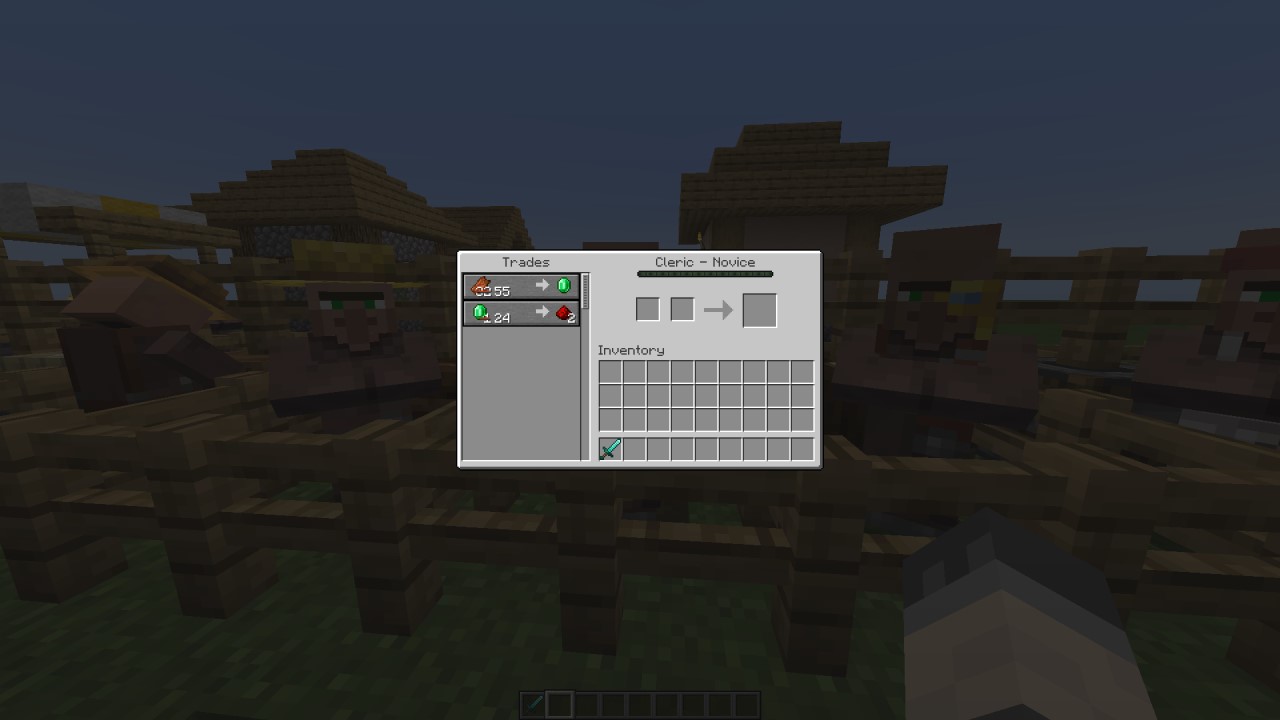
If you have been playing recently, you might have noticed that getting Mending is not as easy as it used to be. Mojang added an experimental toggle that ties specific enchantments to the biome the villager was born in. This was a huge shift for me, because it meant I couldn’t just sit in one village and reroll until I got lucky.
- Swamp Librarians are the only ones who sell Mending at the Master level.
- Desert Librarians are your go-to for high-level Efficiency books.
- Jungle Librarians are where you find Unbreaking, which is vital for late-game tools.
- Snowy Biome villagers are the only ones who will give you Silk Touch.
Since villages don’t naturally spawn in Swamps or Jungles, I had to manually transport two villagers there and breed them to get the right “type.” It adds an extra layer of adventure to the game.
How to reduce lag in your trading hall
When my trading hall hit 100 villagers, my server started to crawl. I realized it was because of the A* pathfinding algorithm. Every single villager is constantly trying to find a path to its workstation, and that math adds up fast.
The AI calculates movement using “block costs”:
- Dirt Paths have a cost of 0, so villagers love them.
- Standard blocks like Stone or Wood have a cost of 1.
- Jumping up a block costs 20, so they avoid it if they can.
- Standing on a workstation or bed has a massive cost of 50.
To fix the lag in my world, I used the double carpet trick. If you place a villager on two layers of carpet, the AI thinks there are no valid nodes to walk on and essentially stops trying to pathfind. This is a game-changer for server performance. I also suggest putting them in 1×1 cells so they cannot bump into each other, as entity collisions are a silent killer for your frame rate .
The deep lore of the Villager civilization
I have always loved the subtle storytelling in Minecraft. According to developer interviews and community theories, the villagers are the peaceful descendants of a much older civilization. While the “Ancient Builders” (that’s us, the players) went extinct or fled to the End, the villagers chose a path of pacifism.
- They lost the ability to build because they swore off the destructive magic that created zombies.
- The Illagers are actually their “fallen” cousins who were banished for being aggressive and jealous of the villager lifestyle.
- Lore suggests that Iron Golems were originally created as a joint defense force before the split between the two groups.
- The Wandering Trader is a mysterious figure who might not even be a villager at all: some designers have hinted they could be an entirely different species .
When you realize that the Pillagers are attacking out of a centuries-old grudge, the raids feel a lot more intense. It is not just a game mechanic: it is a continuation of a story that started long before you spawned into the world.



Published: Apr 16, 2026 02:32 pm